Why Industrial Three-Phase Motors Are Preferred for Heavy-Duty Applications
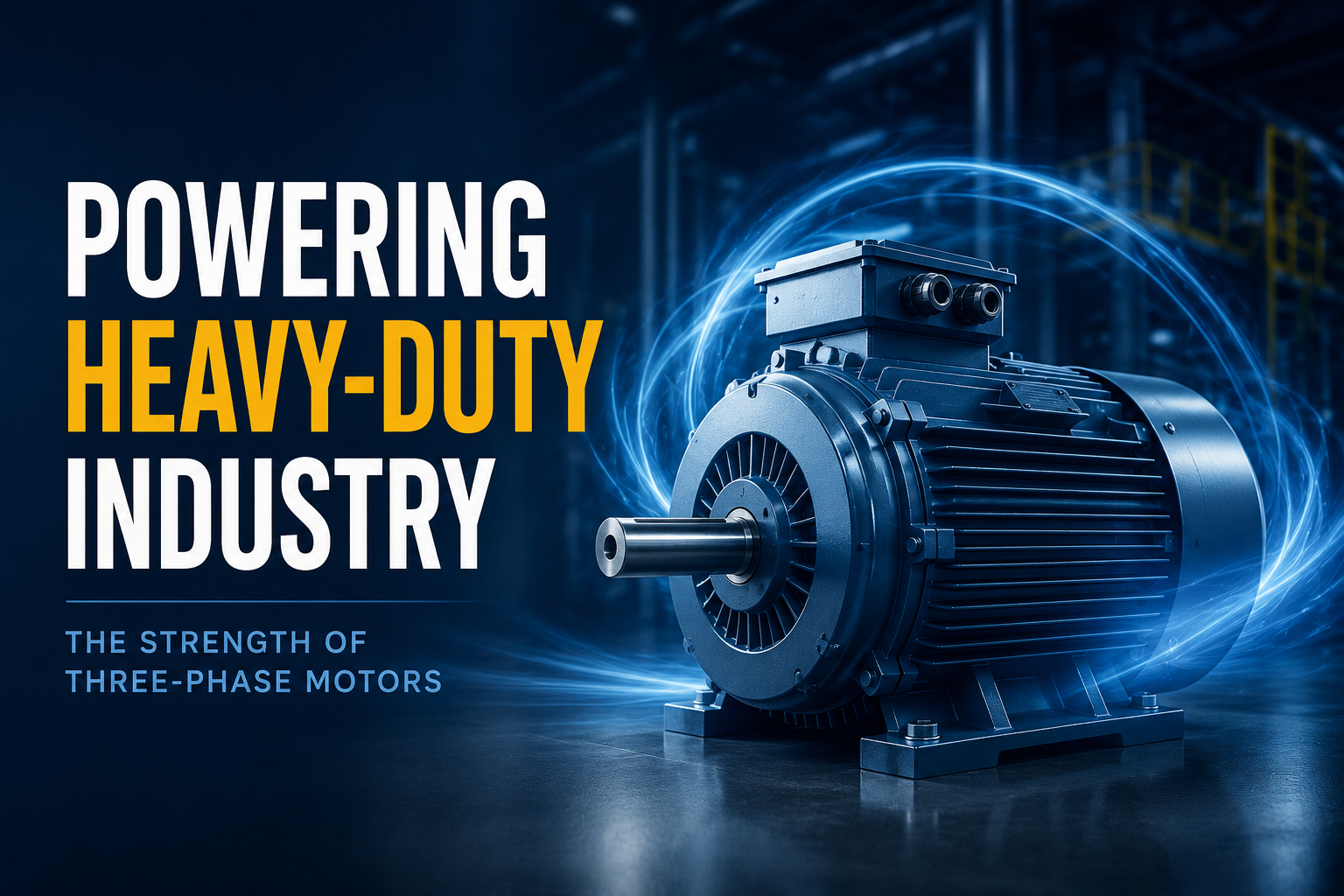
In modern industrial environments, efficiency, reliability, and consistent performance are essential in order to maintain productivity. From manufacturing plants and mining operations to water treatment facilities and large-scale HVAC systems, electric motors serve as the backbone of countless industrial processes.
Among the available motor technologies, three-phase electric motors have become the preferred choice for heavy-duty applications due to their superior performance characteristics and operational advantages.
Industrial facilities often need equipment continuously under demanding conditions. In such environments, choosing the right motor can directly impact energy consumption, maintenance requirements, equipment lifespan, and overall operational efficiency. This is why industrial three-phase motors continue to dominate sectors that need high power output and dependable performance.
What Are Three-Phase Electric Motors?
A three-phase electric motor operates using a three-phase power supply, where three alternating currents are delivered through separate conductors. Each phase is offset by 120 degrees, creating a rotating magnetic field that drives the motor smoothly and efficiently.
Unlike single-phase motors, which rely on auxiliary starting mechanisms, a 3 phase AC motor naturally generates a rotating magnetic field. This allows the motor to start independently and deliver consistent torque throughout the operation.
The basic components of a motor three-phase system include:
- Stator
- Rotor
- Bearings
- Shaft
- Cooling system
- Electrical windings
These components work together to convert electrical energy into mechanical motion with minimal energy loss.
Higher Power Output for Demanding Operations
One of the primary reasons industrial three phase motors are preferred for heavy-duty applications is their ability to deliver substantial power output. Industries often need motors to drive:
- Conveyor systems
- Compressors
- Pumps
- Crushers
- Industrial fans
- Mixers
- Heavy machinery
These applications demand continuous high torque and reliable operation. A 3 phase AC motor can generate greater power compared to a similarly sized single-phase motor, making it ideal for equipment that operates under heavy loads.
The balanced power delivery from a three-phase electrical supply ensures that the motor can handle demanding workloads without experiencing significant fluctuations in performance.
Superior Energy Efficiency
Energy efficiency has become a major priority for industrial facilities that want to reduce operating costs and meet sustainability goals.
Three-phase electric motors are inherently more efficient as they receive a constant flow of power. The three-phase supply minimizes energy losses and reduces inefficiencies that are linked with power fluctuations.
Benefits include:
- Lower energy consumption
- Reduced operating costs
- Improved power factor
- Higher overall system efficiency
- Reduced carbon footprint
In facilities that are operating around the clock, even small improvements in motor efficiency can convert into significant annual savings.
Many modern industrial three-phase motors are designed to meet premium efficiency standards, helping organizations achieve long-term energy management objectives.
Smooth and Consistent Torque Production
Heavy-duty industrial equipment often needs smooth operation in order to prevent mechanical stress and maintain the quality of the production.
A key advantage of a motor three phase configuration is its ability to produce nearly constant torque. As the power supplied remains continuous, torque pulsations are significantly reduced. This smooth torque delivery offers various benefits:
- Reduced vibration
- Less wear on mechanical components
- Improved product quality
- Lower maintenance requirements
- Extended equipment lifespan
Applications such as conveyor systems, manufacturing machinery, and industrial pumps particularly benefit from the stable operation provided by three-phase electric motors.
Self-Starting Capability
Single-phase motors typically need additional components, such as start capacitors or auxiliary windings, to start rotation.
On the other hand, a 3 phase AC motor is naturally self-starting. The rotating magnetic field generated by a three-phase power supply automatically produces starting torque without the need for extra mechanisms.
Advantages of self-starting operation include:
- Simplified motor design
- Improved reliability
- Lower maintenance costs
- Faster startup performance
- Reduced component failure risk
For industrial operations where equipment must start and stop frequently, this feature enhances overall reliability of the system.
Better Reliability in Harsh Industrial Environments
Industrial facilities often expose motors to challenging conditions, such as:
- Dust
- Moisture
- High temperatures
- Heavy loads
- Continuous operation
Industrial three phase motors are designed to withstand these demanding environments. Their robust construction and simplified operating principles contribute to exceptional reliability.
Key reliability advantages include:
- Fewer starting components
- Lower heat generation
- Improved cooling performance
- Reduced electrical stress
- Longer service life
As downtime can be extremely costly, industries prioritize motor technologies that offer dependable operation over extended periods.
Reduced Maintenance Requirements
Maintenance expenses can significantly impact the total cost of ownership for industrial equipment.
The design of a motor three phase system generally results in fewer mechanical and electrical complications that are compared to alternative motor configurations.
Maintenance benefits include:
- Fewer moving parts
- Reduced vibration-related wear
- Lower bearing stress
- Improved thermal management
- Longer maintenance intervals
When properly installed and maintained, three-phase electric motors can operate efficiently for many years with minimal intervention.
This reliability helps organizations reduce downtime and improve productivity.
Excellent Scalability for Industrial Applications
Heavy-duty industrial operations often need motors that range from a few horsepower to several thousand horsepower.
A major advantage of industrial three phase motors is their scalability across a wide range of applications.
Industries can use these motors for:
- Small production equipment
- Medium-sized process systems
- Large manufacturing machinery
- Mining equipment
- Utility infrastructure
- Heavy industrial operations
This versatility makes the 3 phase AC motor one of the most widely used motor technologies in the world.
Compatibility with Variable Frequency Drives (VFDs)
Modern industrial facilities increasingly rely on automation and process control systems to improve efficiency.
Three phase electric motors are highly compatible with Variable Frequency Drives, which allows operators to control speed and torque precisely.
Benefits of VFD integration include:
- Energy savings
- Improved process control
- Soft starting capability
- Reduced mechanical stress
- Enhanced productivity
- Lower operating costs
By adjusting motor speed to match actual load requirements, facilities can significantly reduce energy consumption while extending equipment life.
This flexibility is particularly valuable in industries where operating conditions frequently change.
Improved Thermal Performance
Heat is one of the primary factors affecting motor longevity and performance.
The balanced current flow within a motor three phase system helps distribute electrical loads more evenly across the motor windings. This results in:
- Lower operating temperatures
- Improved cooling efficiency
- Reduced insulation degradation
- Extended motor lifespan
Because excessive heat accelerates component wear, the superior thermal characteristics of industrial three phase motors contribute significantly to their durability and reliability.
Cost-Effective Long-Term Investment
Although the initial installation of three-phase power infrastructure may involve higher upfront costs, the long-term benefits typically outweigh the investment.
Organizations benefit from:
- Lower energy bills
- Reduced maintenance expenses
- Increased productivity
- Longer equipment lifespan
- Improved operational reliability
Over the lifetime of the equipment, three phase electric motors often deliver a significantly lower total cost of ownership compared to alternative motor technologies.
For facilities that are operating heavy-duty equipment continuously, these savings can be substantial.
Conclusion
The widespread use of industrial three phase motors across manufacturing, mining, utilities, processing plants, and infrastructure projects is no coincidence. Their ability to provide high power output, exceptional efficiency, reliable operation, smooth torque delivery, and long service life makes them the preferred solution for demanding industrial environments.
Whether powering pumps, compressors, conveyors, or large-scale production equipment, a 3 phase AC motor delivers the performance which is required to keep critical operations running efficiently. As industries continue to prioritize energy efficiency, automation, and reliability, the importance of the motor three phase design will only continue to grow.
For organizations that are looking for a proven and cost-effective solution for heavy-duty applications, three phase electric motors remain the industry standard and a cornerstone of modern industrial productivity.









Post Comment