Snowboard Photo Cleanup Must Preserve The Trick Position
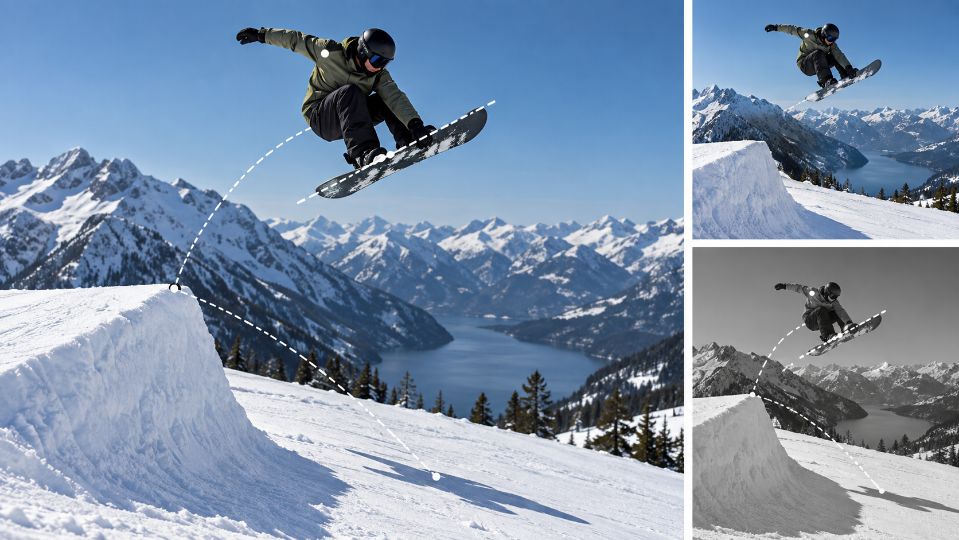
An action photograph can lose its truth while gaining drama. The rider rises higher above the lip, the board rotates a little farther, and a messy shadow disappears from the snow. The edit may look believable, yet the frame no longer records the trick the photographer captured.
An AI image tool can remove a spectator or balance flat winter light, but action-sports coverage depends on body, board, terrain, and shadow agreeing. The athlete’s position carries the story. Cleanup must work around that system rather than improving it.
PicEditor AI offers object erasing, background changes, enhancement, upscaling, and image expansion. Those tools can support a magazine layout or social crop. They cannot certify trick completion, airtime, speed, landing, or competition result from a single frame.
Lock The Rider Board Terrain And Shadow
Mark four protected zones before using an AI Photo Editor. The rider includes limbs, clothing edges, and visible gear. The board includes nose, tail, bindings, and contact with boots. Terrain includes lip, landing, rail, or wall. The shadow helps explain height, direction, and light.
Trace The Board Angle Through Both Bindings
Draw a line through the binding centers and another through the rider’s shoulders. These guides preserve rotation and body-board relationship. Do not straighten the board because the composition feels tilted; the tilt may be the defining moment of the trick.
Keep Snow Spray Attached To The Action
Spray can show takeoff, edge contact, or landing force. Remove isolated lens spots, but protect the plume connected to the board. A generated spray pattern may imply a carve or impact that did not occur.
| Zone | Protected detail | Reject when |
|---|---|---|
| Rider | Limb position and clothing edge | Arm, hand, or silhouette changes |
| Board | Angle, flex, bindings, graphics | Nose length or rotation changes |
| Terrain | Lip, rail, landing geometry | Takeoff height or slope changes |
| Shadow | Direction and relation to rider | Shadow vanishes or moves independently |
The four zones show why some apparent clutter is evidence. They also give the photo editor a safer area to work: distant spectators, unrelated signage, or edge debris outside the action system.
Save a copy with the protection mask visible. The photographer, rider, and publication editor can then see what was held fixed. A mask is more useful than a vague promise that the action was untouched, especially when several people handle color, cleanup, and layout.
Check the board graphics and clothing seams as identity markers. A cleanup that redraws them may not change the trick, but it can change equipment, sponsor representation, or recognizable style. Protect those details with the board and rider rather than treating them as replaceable texture.
Remove Distractions Outside The Trick Geometry
Start with a crop. A tighter frame may remove a lift tower, bag, or spectator without generating replacement snow. Keep enough approach, lip, and landing to understand the maneuver. A dramatic crop that hides the landing changes what the image can support.
Mask Spectators Without Rebuilding The Feature
First confirm that the publication permits object removal for this image. If it requires an unaltered documentary photograph, keep the spectator or choose another source frame. For an explicitly illustrative treatment, use a small mask only where the surrounding snow or sky is simple. During the AI photo enhancer pass, keep the mask away from the lip, rail, spray, and rider outline. If the spectator overlaps the action, choose another frame or leave them in.
Balance Snow Detail Without Inventing Texture
Winter highlights clip easily. Lower global brightness or recover available detail from the source before adding local texture. Upscaling can create crisp crystals that were not resolved by the camera, so judge the source at its native size before approving a larger export.
Keep Sponsor Marks In Editable Publishing Layers
Do not reconstruct a blurred logo or alter board graphics to fit a campaign. Use exact sponsor names in captions and layout text, subject to the publication agreement. PicEditor AI can clean the surrounding scene while branding remains a conventional editorial element.
Record the AI Photo Editor adjustments with the crop and mask description. That record gives the photographer and athlete a clear account of what changed outside the protected action zones and helps a later editor reproduce the approved treatment.
Separate weather correction from action cleanup. Snow can turn blue in shade and flat in cloud, but global color changes should not selectively brighten the rider or darken the landing. Compare neutral snow in several parts of the frame before choosing a grade.
If the image is intended for a cover, build extra headline space with a conventional canvas before generating new terrain. Extending blank sky is easier to disclose and inspect than reconstructing a rail or landing. Keep the original crop inside the working file so the layout editor can see the boundary.
Check Rider Board And Shadow As One System
Overlay the edited frame on the source and align the rider’s torso. Toggle between them while watching the board ends, boots, hands, terrain lip, spray, and shadow. Those elements should stay fixed even when color and distant background change.
Run The Silhouette Test At Thumbnail Size
Turn both frames into black silhouettes. The body and board shapes should match. A thumbnail makes a stretched leg, longer nose, or altered grab easier to see than a detailed full-color preview.
Ask The Athlete To Name The Captured Moment
Show the candidate without describing the intended trick. The athlete or an experienced editor should identify the phase and position consistently with the source. Their review cannot verify every claim, but it can reveal when cleanup changed a defining posture.
Keep Sequence Evidence When It Exists
If the camera captured a burst, retain adjacent frames. They show approach and landing and help distinguish a held position from a transitional shape. Never use adjacent frames to fabricate one impossible composite without an explicit illustration label.
A photo editing tool can make the selected frame more readable after this check. It should not move the rider closer to the lip, increase apparent height, or repair an incomplete grab for the sake of a stronger cover.
View the frame with its caption and any trick name before approval. If the words claim a completed rotation, held grab, or clean landing, confirm that the photograph or accompanying sequence actually supports it. The edited still should never be asked to prove an event outside its captured moment.
An AI photo enhancer may sharpen a social export, but keep sharpening equal across rider and terrain. Haloes around the board can exaggerate separation from the background and make height look greater. Compare the native-size source before accepting an enlarged derivative.
Publish The Moment The Camera Actually Caught
Action photography earns attention because timing, technique, terrain, and risk meet in one frame. The image does not need an upgraded trick. It needs a clean presentation that leaves those relationships intact.
Keep the burst and original frame available for editorial questions.
Protect the four zones, edit outside them, and compare the silhouette before export. PicEditor AI is a useful finishing tool when the athlete still recognizes the exact body-board moment that happened on the snow.




Post Comment