The Velocity Trap: Why Speed-First AI Workflows Kill Performance Creative
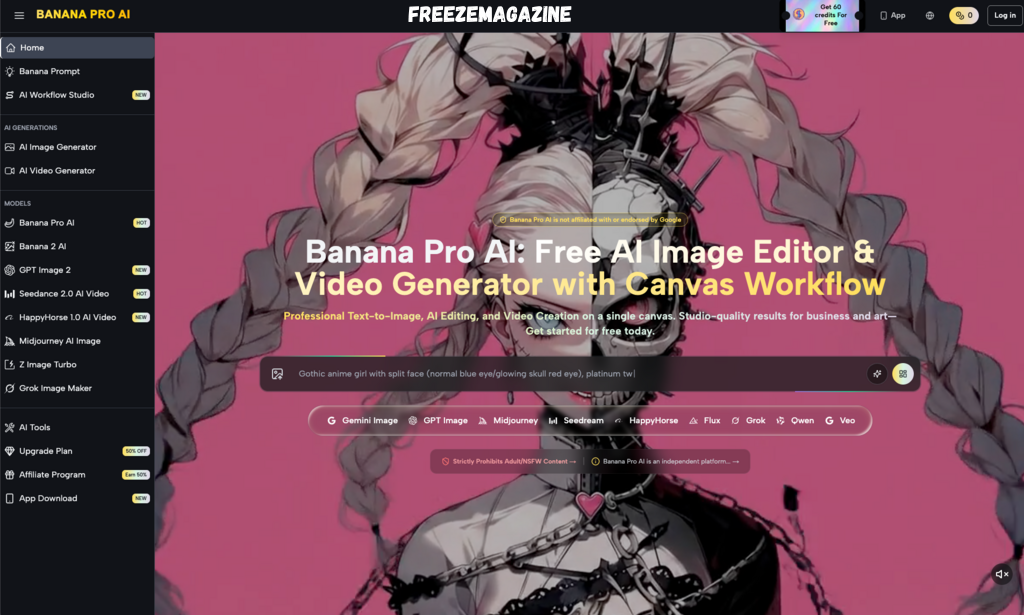
In the current performance marketing landscape, the mandate is clear: produce more, test faster, and lower the cost per creative. Generative AI has been framed as the ultimate solution to this pressure. Teams are racing to integrate models that can churn out hundreds of variations in minutes. However, a dangerous pattern is emerging among content teams and performance marketers. In the rush to maximize output speed, many are sacrificing the very control required to maintain brand integrity and drive actual conversion.
This “velocity trap” occurs when the focus shifts from the quality of the creative asset to the sheer volume of the generation pipeline. When speed is the only metric, the result is often a flood of “uncanny valley” imagery, inconsistent branding, and assets that fail to resonate with a sophisticated audience. To build a sustainable pipeline, the focus must shift from “how fast can we generate?” to “how much control do we have over the output?”
The Myth of the ‘Magic’ Prompt
One of the primary mistakes teams make when adopting tools like Banana AI is treating the prompt box as a magic wand. In high-velocity workflows, there is a tendency to rely on increasingly complex text prompts to dictate every detail of an image. This is fundamentally inefficient. Text is a high-latency, low-precision interface for visual concepts.
When a team sets up a workflow for speed, they often skip the structural controls—like depth maps, edge detection, or pose guidance—in favor of rapid-fire prompting. The result is a high “discard rate.” You might generate 50 images in a minute, but if 48 of them are unusable because the lighting is wrong or the product placement is nonsensical, you haven’t actually saved time. You’ve simply moved the bottleneck from creation to curation. True efficiency comes from a controlled environment where the initial output is 80% of the way to the final asset, rather than a 2% success rate from a volume-heavy prompt storm.
The Cost of Brand Drift in Automated Pipelines
For performance marketers, consistency is not just an aesthetic choice; it is a trust signal. When AI visual workflows are optimized purely for speed, “brand drift” becomes inevitable. This happens when the model begins to hallucinate details that deviate from a brand’s established visual language—slightly different color palettes, inconsistent lighting styles, or character features that change from one ad set to the next.
A Nano Banana Pro workflow succeeds when it prioritizes “Seed” consistency and reference-based generation. By using a consistent seed or a reference image as a structural anchor, teams can ensure that the “Banana Pro” environment produces assets that look like they belong to the same campaign. Without this level of control, the speed of generation actually works against you, diluting your brand equity with every new batch of inconsistent creative.
Mistaking ‘Real-Time’ for ‘Ready-to-Use’
There is a significant difference between a tool that generates an image quickly and a tool that fits into a professional production pipeline. Many teams adopt an AI Image Editor based on the speed of the underlying model, neglecting the necessary “post-generation” steps. A speed-first workflow often ignores the reality that raw AI outputs rarely meet professional standards without adjustment.
A professional workflow requires a canvas-based approach where you can isolate elements, adjust layers, and refine specific areas of an image without regenerating the entire frame. If your workflow requires you to go back to the prompt box every time a hand looks slightly off or a background is too busy, your “high-speed” process is actually a series of stops and starts. It is important to note that while current models are incredibly capable, they still struggle with specific nuances—like rendering legible text in complex environments or maintaining perfect anatomical proportions in high-action shots. Expecting perfection from a single click is a strategic error.
The Structural Failures of ‘Prompt-Only’ Workflows
Many operators believe that more “compute” or faster models will solve their creative bottlenecks. This is rarely the case. The bottleneck is usually the lack of a “human-in-the-loop” interface that allows for granular control. When teams use Nano Banana as part of a structured workflow, they transition from being “prompt engineers” to being “creative directors.”
Neglecting the Power of Image-to-Image
The biggest mistake in speed-focused setups is the underutilization of Image-to-Image (Img2Img) workflows. In a rush, teams often forget that starting with a rough sketch or a basic 3D block-out provides 10x more control than the most detailed text prompt. By using a base image, you dictate the composition, the horizon line, and the weight of the subjects. This drastically reduces the variance in output and ensures the AI is filling in the details rather than guessing the structure.
The Lifecycle of a Creative Asset
Speed-first workflows often view an image as a disposable unit. However, in performance marketing, a single successful creative should be the foundation for dozens of iterations. A “control-first” approach focuses on modularity. Can the background be swapped? Can the lighting be adjusted for a “night mode” version of the ad? If your AI setup doesn’t allow for this level of manipulation, you are essentially starting from zero every time you need a new iteration, which is the antithesis of speed.
Evaluating Tools Beyond the Generation Button
When evaluating a platform like Banana Pro, it is tempting to look only at the gallery of high-quality examples. However, the real value lies in the “Workflow Studio” or “Canvas” capabilities. An operator-led approach asks: “How easily can I fix an error in this image?”
If the answer involves re-generating the entire image and hoping for a better result, the tool is designed for hobbyists, not performance teams. A professional environment must offer tools for in-painting, out-painting, and precise mask control. These features might seem like they slow down the initial generation, but they drastically shorten the time from “concept” to “live ad.”
Limitations and the Reality of AI Integration
It is critical to maintain a level of skepticism regarding “automated” creative. Even with a high-performance tool like Nano Banana, there are inherent limitations that teams must account for:
- Niche Context: AI models are trained on massive datasets, but they often lack the “local knowledge” of a specific product category or a very niche visual trend. If your creative requires hyper-specific industry equipment or proprietary product designs, a speed-first AI workflow will likely hallucinate those details incorrectly.
- The “Sameness” Problem: High-speed, low-control workflows tend to produce images that look like “AI images.” There is a certain gloss and composition style that becomes recognizable to consumers. Over-reliance on default model settings without manual intervention can lead to creative fatigue among your target audience.
Building a Balanced AI Creative Pipeline
To avoid the velocity trap, teams should restructure their KPIs. Instead of measuring “images per hour,” measure “approved assets per hour.” This shift naturally incentivizes control over raw speed.
Start by defining your structural constraints. Use reference images for every campaign. Establish a “master seed” for character or environment consistency. Use the Nano Banana Pro capabilities to lock in the layout before worrying about the fine details of the textures or lighting.
By prioritizing control, you actually achieve greater speed in the long run. You spend less time debating which of the 50 “okay” images to use and more time refining the two “great” images that will actually move the needle on your CTR. The goal of AI in a professional setting isn’t to replace the creative process; it’s to remove the friction between an idea and a high-fidelity execution.
In conclusion, the most successful performance marketing teams in the AI era won’t be the ones with the fastest generation buttons. They will be the ones who have mastered the “editor” mindset—using tools to steer the AI with precision rather than just letting it run at full speed toward an uncertain destination. Control is the only way to ensure that your high-velocity output actually translates into high-performance results.







Post Comment