Corporate Video Production Agency vs. Brand Identity Studio: Which Should US Companies Hire First?
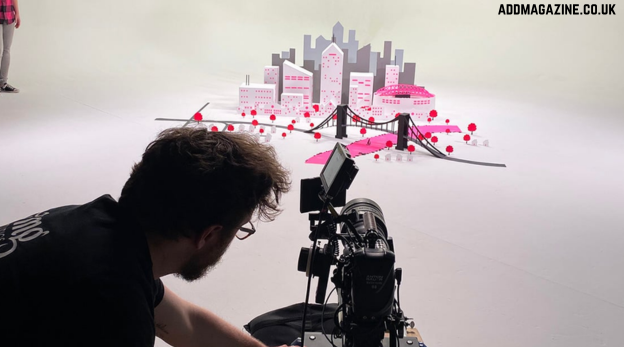
When a company decides to invest in how it presents itself to the market, two categories of creative vendors tend to come up quickly: video production and brand identity. Both are legitimate investments. Both can produce visible, lasting results. But when budget is finite and organizational capacity is limited, hiring both simultaneously often leads to wasted spend, misaligned output, and creative work that needs to be redone within a year.
This is not a theoretical problem. It plays out regularly across growing US businesses — regional service companies, mid-market B2B firms, and product companies scaling into new verticals. The sequence in which these two services are engaged often determines whether the investment holds value over time or becomes an expensive reset.
Understanding what each service actually does, where it fits in a company’s development, and what it cannot do on behalf of the other is the starting point for making a sound decision.
What Each Service Actually Delivers
A corporate video production agency produces filmed content — explainer videos, company overview reels, interview-based testimonials, product demonstrations, and similar visual media. The output is a finished video asset, ready for distribution across digital platforms, sales presentations, or trade events. The agency manages everything from scripting and storyboarding through filming and post-production. The final deliverable is content, not a framework.
A brand identity studio works upstream from that. It develops the visual and verbal system that governs how a company presents itself across every touchpoint. This includes logo design, typography, color systems, iconography, tone-of-voice guidelines, and the strategic positioning that ties those elements together. The output is not a single asset — it is a set of decisions and standards that everything else is built on top of, including video content.
Brand identity design services address who a company is, how it should be perceived, and how those perceptions should be communicated consistently. Video production addresses what a company says and shows, within a format that has already been defined. These are not interchangeable services. One informs the other.
The Risk of Reversing the Sequence
Companies that commission video production before establishing a clear brand identity tend to encounter a specific and avoidable problem: the video reflects a brand that does not yet exist in a defined form. The production team makes default creative decisions — on tone, visual style, logo treatment, color usage, and messaging — because there is no agreed framework guiding those choices.
This is not a failure of the production agency. It is a structural gap. Without defined brand standards, creative vendors default to what looks broadly professional or what matches industry norms. The result is video content that may be technically well-produced but is disconnected from the actual identity the company is building toward. When brand identity work is completed afterward, the video often needs to be partially or fully remade.
That rework is a direct cost. But the less visible cost is the period during which the company used video content that contradicted its intended positioning — with clients, prospects, and partners who formed impressions based on that content.
What Brand Identity Work Actually Involves
Brand identity design services are frequently misunderstood as being primarily aesthetic — a logo refresh or a new color palette. In practice, the work is more foundational than that. It involves decisions about positioning, differentiation, and the attributes a company wants associated with its name over a long period of time.
According to the US Small Business Administration, brand consistency across all communications directly affects customer trust and recognition — which is why the underlying system matters as much as any individual visual or message.
The visual components that come out of brand identity work — logos, type systems, color values — are expressions of that positioning. They exist to make the brand recognizable and consistent across a wide range of formats: printed materials, digital platforms, physical environments, and yes, video content. A brand identity system essentially answers the question: what should this company look and sound like, regardless of format?
Why This Work Needs to Come Before Content Production
Content production — whether video, photography, or written material — requires decisions that a defined brand identity handles automatically. What colors should appear in the background? What language register should the narrator use? What visual style should the animation follow? How prominently should the logo be treated? These are not small details. They are the elements that make a company’s content feel cohesive over time, across multiple vendors and multiple campaigns.
When those decisions have not been made at the brand level, they get made at the project level instead — by individual vendors, individual designers, or individual marketing managers. Each project might be executed well on its own terms, but the accumulated output looks fragmented. Over time, this creates a credibility problem. A company that presents differently across its website, its brochures, and its videos communicates inconsistency to the market, even if unintentionally.
Brand identity design services exist precisely to prevent this. They create a shared set of standards that any downstream vendor can follow, which means that video production agencies, web developers, print designers, and social media teams can all work independently without producing output that conflicts.
When Video Production Is the Right First Investment
There are specific circumstances where investing in video before formal brand identity work is a defensible decision. These situations are narrower than they might appear.
A company that already has a well-established, documented brand identity — even an informal one built over years of consistent practice — may have enough foundational clarity to produce video content without formal identity work first. If the visual standards, tone of voice, and positioning are already understood internally and applied consistently, the absence of a formal brand guidelines document does not represent the same level of risk.
Similarly, a company producing video for a single, time-limited campaign or event — one where long-term brand consistency is not the objective — may not need brand identity work as a prerequisite. Trade show videos, one-time product launches, and internal training content are contexts where the calculus is different.
But for companies building a long-term market presence, entering a new category, or rebranding after a merger or pivot, video production without prior brand identity work almost always creates misalignment that has to be corrected later.
The Compounding Effect of Getting the Sequence Right
When brand identity work is completed first, subsequent investments in content production become more efficient and more consistent. A video production agency working with a complete brand identity system spends less time on creative decision-making and more time on execution quality. The brief is clearer, the approvals process is faster, and the final output requires fewer revisions because the standards are already established.
This efficiency compounds over time. As a company produces more content — more videos, more digital assets, more campaign materials — each piece benefits from the same foundational decisions. The cost of brand identity work, spread across years of downstream content production, becomes a relatively small per-unit investment. The cost of not doing it, measured in remakes, misalignment corrections, and lost credibility, is typically higher.
How US Companies Should Think About the Decision
The question of which service to hire first is ultimately a question about where a company is in its own development. Not every company needs a full brand identity engagement before producing any video content. But most companies that are making meaningful marketing investments for the first time, entering competitive markets, or trying to communicate clearly to a new audience do benefit from brand identity work first.
The following situations generally call for brand identity design services before video production:
• The company is undergoing a rebrand, merger, or significant strategic shift and needs its market positioning to reflect a new direction clearly.
• The company has no documented brand standards and has been producing materials inconsistently across vendors or departments.
• The company is entering a more competitive market where differentiation and perception management matter significantly.
• The company is planning a sustained content program and wants all future materials to maintain a consistent visual and verbal standard.
• The company has experienced internal disagreements about how it should present itself and needs a resolved, documented framework to guide creative decisions going forward.
Video production becomes the appropriate first investment when the company already has resolved brand standards, is producing content for a specific, bounded purpose, or is working within a short operational window where the long-term implications of visual consistency are limited.
Closing Thoughts
The debate between hiring a video production agency versus a brand identity studio first is not really a debate about which service is more valuable. Both have a legitimate role in a company’s communications infrastructure. The more useful question is about sequence — and sequence depends on what a company currently has in place and what it is trying to build.
For most US companies making serious investments in how they present themselves to the market, brand identity work comes first. It creates the framework within which video content, and every other form of communication, operates reliably and consistently. Without that framework, content production is more expensive, more fragmented, and more likely to require correction.
Getting the sequence right does not require a large budget or a long timeline. It requires clarity about where the company is today, where it intends to go, and what foundational decisions need to be made before the production work begins. Companies that approach it that way consistently get more durable value from both investments.









Post Comment