Multivitamins vs Diet: Can Food Alone Meet Your Needs?
If you try to eat healthy, you’ve probably heard this before: “You should get all your nutrients from food.”
And honestly, that’s still the ideal.
But real life doesn’t always look like a perfectly balanced plate.
Some days are rushed. Meals get skipped. We rely on quick options. Even when we try to eat well, it’s not always clear if we’re actually getting everything our body needs.
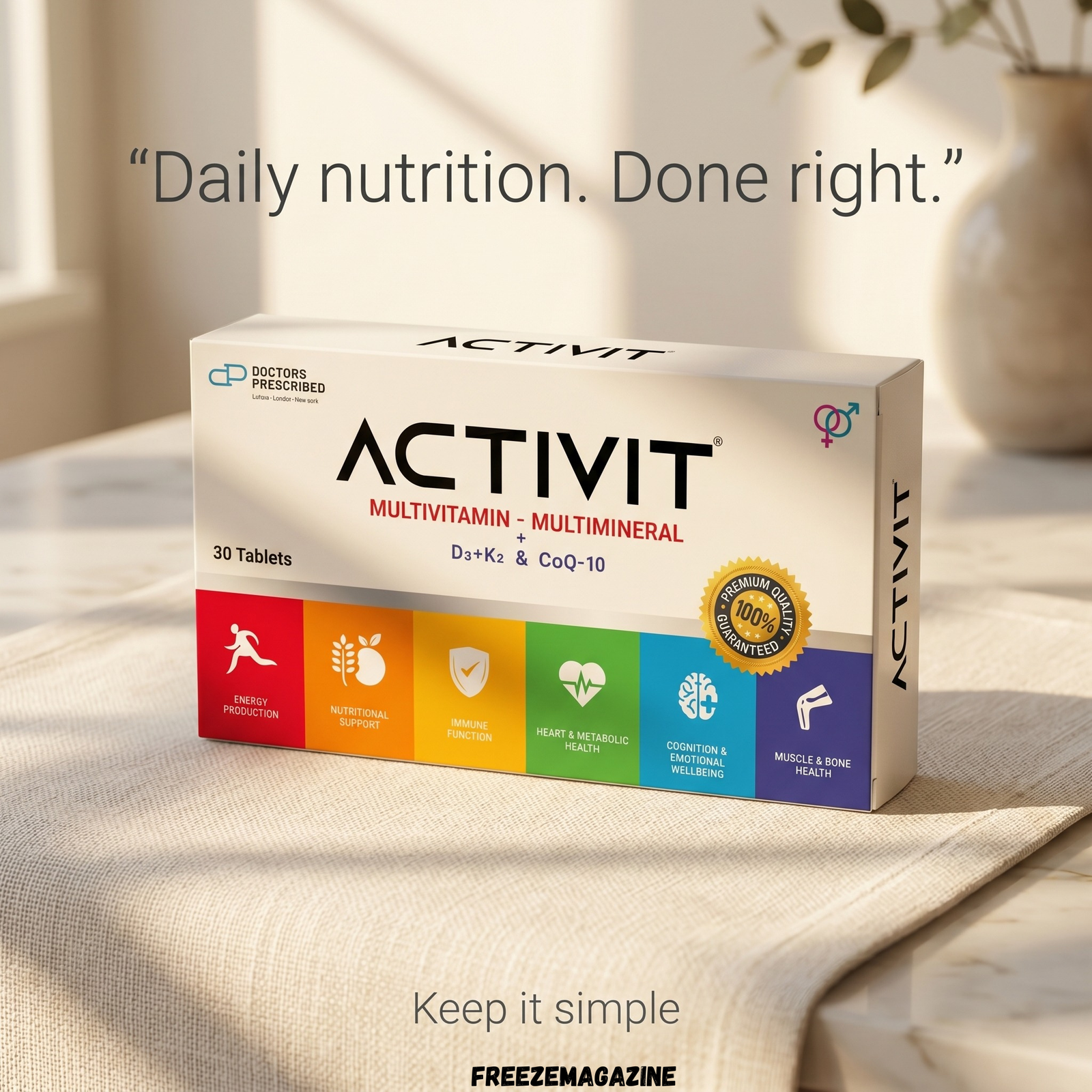
So the question becomes more obvious here: Is diet alone enough, or do multivitamins—like ACTIVIT—have a place too?
The Ideal: Food First, Always
Let’s start with what’s true.
They don’t just provide vitamins and minerals—they come with fiber, antioxidants, and natural compounds that work together in ways supplements simply can’t fully replicate. But why?
Think about it:
- Fruits and vegetables provide a mix of vitamins plus plant compounds
- Dairy and whole grains offer both nutrients and energy support
- Proteins like eggs, meat, and legumes bring multiple essential nutrients together
This “balanced eating pattern” is something science consistently supports. Nutrients from food are often better absorbed and used by the body.
So yes—a balanced diet should always be the foundation.
The Reality: Most Diets Aren’t Perfect
Even with good intentions, many people fall short of daily nutrient needs. It’s not always obvious, either.
You might be eating regularly, but still missing key nutrients like:
- Vitamin D
- Vitamin B12
- Iron
- Zinc
There are a few reasons for this:
- Busy Lifestyles: Long work hours, irregular meals, and eating on the go can reduce diet quality without you realizing it.
- Food Choices: Processed foods are convenient but often lower in essential nutrients.
- Dietary Restrictions: Vegetarian, vegan, or restrictive diets can unintentionally leave gaps if not carefully planned.
Where Multivitamins Come In
This is where multivitamins start to make sense—not as a replacement, but as a nutritional support.
A well-formulated multivitamin is designed to:
- Fill small nutritional gaps
- Support daily nutrient consistency
- Help maintain overall health
It’s not about “boosting” your body overnight. It’s more about covering the basics, especially on days when your diet isn’t ideal.
A multivitamin just helps provide nutrients that might be missing.”
Can Multivitamins Replace Food?
Short answer: No. And they shouldn’t.
Supplements don’t contain everything your body needs. They don’t replace:
- Fiber from fruits and vegetables
- Healthy fats from whole foods
- The complex nutrient interactions found in real meals
Relying only on supplements while ignoring diet can actually work against your health in the long run.
So if the question is “food or multivitamins?” — it’s really the wrong question.
A better question is: How can both work together?
A More Balanced Approach
Instead of choosing one over the other, most people benefit from a combination:
- Focus on eating a reasonably balanced diet
- Use a multivitamin as daily support, not a substitute
This approach is especially helpful if:
- Your schedule is unpredictable
- You don’t always eat a wide variety of foods
- You want consistent baseline nutrition
This is where a complete supplement like ACTIVIT can fit into your daily routine, providing 24 essential nutrients, including key vitamins and minerals such as Vitamins A, C, D3, E, and B-complex, along with important minerals like Iron, Zinc, Magnesium, and Calcium to support overall health.
However, it’s not meant to replace meals or “fix everything.” But it can act as a daily nutritional backup, helping support areas like energy, immunity, and overall wellness—especially when your diet isn’t perfect.
So, Do You Really Need a Multivitamin?
It depends on your situation.
You may not need one if:
- You consistently eat a balanced, varied diet
- You include fruits, vegetables, proteins, and whole grains daily
- You have no known deficiencies
You might benefit from one if:
- Your diet is inconsistent
- You feel low energy or run down without a clear reason
- You want a simple way to support overall nutrition
The key is not to overcomplicate it.
You don’t need dozens of supplements. In most cases, if support is needed, a single well-balanced formula is enough. ACTIVIT fits well into this approach, offering a convenient and consistent way to support your daily nutrition.
Common Mistake: Overdoing It
One thing worth mentioning—more is not always better.
Some people start taking multiple individual supplements without really knowing what they need. This can lead to:
- Overlapping nutrients
- Unnecessary intake
- Confusion about what’s actually working
Keeping things simple is usually the smarter approach.
Conclusion
Food will always come first. That hasn’t changed.
But expecting a perfect diet every single day isn’t realistic for most people. And that’s okay.
Multivitamins aren’t a shortcut—they’re a support tool.
Used the right way, they can help bring consistency to your nutrition, especially when life gets busy or meals aren’t ideal.
So instead of asking whether food or supplements are better, it makes more sense to see how they can complement each other.
A balanced diet builds the foundation.
And when needed, a simple, complete formula like ACTIVIT can help fill in the gaps—nothing more, nothing exaggerated, just practical support for everyday health.









Post Comment