AI Compliance Solutions Helping Enterprises Automate Risk and Content Governance
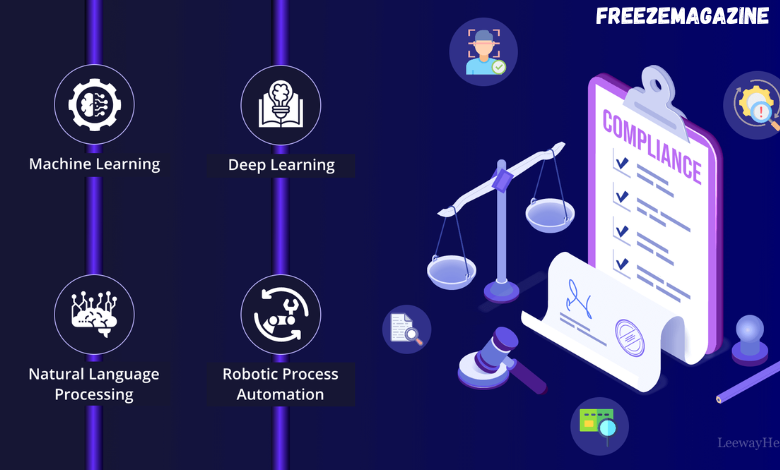
Enterprises now manage expanding volumes of digital content, customer communications, and operational workflows under increasing regulatory scrutiny, making governance difficult to sustain through manual oversight alone. In this context, modern compliance solutions enable organizations to automate risk monitoring and content control while maintaining operational speed across distributed teams.
Why Risk and Content Governance Have Become Enterprise Priorities
Enterprise operations increasingly depend on digital communication across marketing, customer support, product documentation, and transactional workflows. Each communication channel introduces compliance exposure, especially in regulated sectors where messaging must adhere to evolving legal and industry requirements.
Traditional governance models relied on centralized review teams conducting periodic audits. However, modern publishing cycles operate continuously, leaving little room for manual review to keep pace. Enterprises now produce thousands of content assets and workflow documents monthly, each requiring oversight.
Risk often emerges not from intentional violations but from outdated messaging, inconsistent terminology, missing disclosures, or procedural deviations across departments. As organizations expand globally, jurisdictional differences further complicate compliance responsibilities.
Automated governance systems help enterprises maintain consistency by embedding validation into workflows rather than treating compliance as a final approval barrier. This shift transforms governance into a continuous operational process instead of a reactive correction mechanism.
Core Risk Areas Enterprises Must Control
Risk exposure now spans multiple operational layers, extending beyond marketing or legal departments. Governance must address internal and external communications simultaneously.
Common enterprise risk areas include inconsistent product claims across markets, outdated contractual language, incomplete regulatory disclosures, and workflow deviations that bypass compliance procedures. Decentralized teams and agency partnerships further complicate enforcement of standards.
Key operational domains requiring structured oversight typically include:
- marketing and promotional content requiring claim validation and disclosures
- customer-facing documentation needing regulatory alignment
- internal workflows subject to procedural compliance obligations
- product information distributed across global channels
- contractual materials requiring standardized terminology
- digital support communications impacting consumer protection compliance
Managing these areas manually becomes increasingly difficult as operational complexity grows. Automation therefore becomes central to maintaining scalable governance frameworks.
compliance solutions in Enterprise Governance Workflows
Automation proves most effective when compliance oversight is embedded within operational systems rather than functioning as an isolated review checkpoint. Governance systems increasingly operate in real time, validating materials as they are created or modified.
In enterprise environments, compliance solutions are commonly integrated into content creation, approval workflows, and documentation systems so regulatory and policy verification occurs continuously during operational execution rather than solely at final review stages.
This integration distributes governance responsibilities across operational teams while still allowing compliance specialists to intervene when nuanced interpretation is required. Automated systems flag missing disclosures, risky phrasing, or procedural inconsistencies early, preventing costly downstream corrections.
Organizations exploring AI compliance solutions often find that workflow integration improves collaboration between legal, marketing, and operational departments by reducing friction caused by late-stage compliance discoveries. Automation helps teams meet governance requirements without slowing production cycles.
Operationally, such systems enable governance to scale alongside enterprise growth, ensuring new products, markets, and digital channels remain aligned with regulatory expectations.
Technology Layers Enabling Governance Automation
Automated governance relies on several technical components that enable systems to interpret content accurately while maintaining workflow efficiency.
Managing Multilingual Compliance Risks
For global enterprises, compliance risks often increase when content is distributed across multiple languages. Regulatory disclosures, policy documents, and product messaging must remain consistent regardless of the language used.
Tools like Lara Translate help organizations maintain consistency by providing context-aware translations that preserve terminology, tone, and meaning across languages.
With glossary management and transparent explanations of translation choices, Lara Translate helps teams reduce the risk of compliance issues caused by inaccurate or inconsistent translations across markets.
Rule Engines Supporting Regulatory Enforcement
Compliance rule engines compare messaging and documentation against regulatory and internal policies. These engines ensure required disclosures appear correctly and prohibited statements are avoided across communications.
Machine Learning Supporting Continuous Improvement
Machine learning systems learn from previous compliance decisions and flagged materials, gradually improving accuracy. This adaptive capability reduces false alerts and aligns automation with evolving enterprise practices.
Enterprises adopting compliance AI solutions rely on these technologies to scale governance across high-volume operational environments while preserving human oversight for complex decisions.
Implementing Governance Automation Effectively
Technology adoption alone does not guarantee successful governance transformation. Enterprises must align operational processes with automation tools to achieve measurable results.
Implementation requires balancing workflow efficiency with compliance integrity so automation supports rather than disrupts daily operations.
Align Governance with Operational Workflows
Automation works best when embedded within workflows already familiar to teams. Systems should support existing processes while improving oversight consistency.
Define Governance Rules Clearly Before Deployment
Automated systems rely on clearly defined standards. Enterprises must structure terminology, messaging rules, and compliance obligations before automation can enforce them effectively.
Educate Teams on System Interpretation
Teams must understand automated alerts and recommendations to respond efficiently. Automation assists decision-making but does not eliminate human responsibility.
Maintain Continuous Regulatory Updates
Regulatory environments evolve constantly. Governance systems require regular updates to remain aligned with new rules and internal policy changes.
Operational implementation often involves:
- mapping workflows to identify governance checkpoints requiring automation
- consolidating compliance standards into centralized rule libraries
- training teams to interpret automated risk notifications accurately
- monitoring system outputs to refine detection accuracy
- updating rule sets as regulatory and organizational policies evolve
Enterprises approaching automation as an ongoing operational evolution rather than a one-time deployment typically achieve stronger governance outcomes.
Measuring Long-Term Governance Impact Across Enterprises
Automation influences enterprise governance beyond immediate compliance improvements. Over time, organizations observe structural shifts in how teams approach risk management and content production.
Automation reduces last-minute corrections and improves collaboration between compliance and operational teams. Governance becomes part of workflow culture rather than an external approval barrier.
Enterprises scaling operations also benefit from automation’s ability to expand oversight proportionally without requiring large increases in manual review capacity. Governance frameworks grow alongside business expansion.
Long-term governance implications commonly include:
- stronger consistency in messaging and documentation across departments and regions
- earlier detection of procedural or communication risks
- smoother cooperation between compliance and operational teams
- scalable governance structures supporting enterprise growth
- reduced need for emergency corrections caused by compliance oversights
These effects demonstrate how automation supports sustainable governance as enterprises expand digital operations across markets.
Conclusion
Enterprise governance challenges continue to grow as organizations expand digital communication channels and operate under increasingly complex regulatory environments. Manual oversight processes struggle to maintain consistent control across distributed operational ecosystems.
Automation enables organizations to embed compliance and risk management directly within operational workflows, helping teams identify issues earlier while maintaining productivity and collaboration. Governance becomes integrated into everyday processes rather than functioning solely as a final checkpoint.
As enterprises continue scaling global operations, intelligent automation increasingly forms the foundation for maintaining consistent content and workflow governance while supporting operational agility in complex regulatory landscapes.






Post Comment