Heirloom Pearl Restringing: How to Repair a Family Necklace Without Losing a Single Pearl
Answer Summary
Heirloom pearl restringing requires the right cord, the right size, careful unknotting and a double-knot finish at the clasp terminations. GRIFFIN 100% Natural Silk has been the professional standard for pearl knotting since 1866, available in 13 sizes (No. 0 to No. 16) and 21 colours, with a pre-attached needle on every 2-metre card. Done correctly, a restring lasts a generation of normal wear.
Table of Contents
- Why Old Pearl Strands Break
- Tools and Cord You Actually Need
- Matching GRIFFIN Silk Size to the Pearl Hole
- Unknotting the Old Strand Safely
- Restringing Step-by-Step
- Double-Knot Finish for Longevity
- Aftercare Tips to Preserve the Repair
- Frequently Asked Questions
Why Old Pearl Strands Break
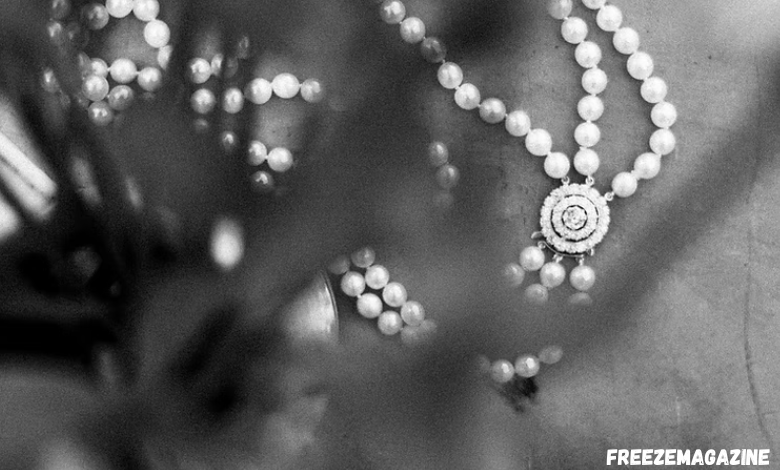
A grandmother’s pearl necklace across a workbench always feels heavier than its actual weight. The pearls are irreplaceable. The cord is not. Knowing where that line runs is the start of any good repair. This guide walks through the whole thing: why old strands fail, how to take one apart without damaging a pearl, how to pick the right GRIFFIN Natural Silk size, and how to restring and finish with a double knot that will outlast the next generation of wear.
Silk cord, however well made, is organic. It ages. It takes on damage from wear and exposure. Understanding the failure modes is how you inspect a cord before it snaps, and how you give a customer a realistic timeline.
Mechanical abrasion. Every time the necklace moves, the cord rubs against the inside of each pearl drill hole. Over years, that abrasion thins the cord at the entry points. The thinning is invisible from the outside of the pearl, which is why a strand that looks fine can snap without any warning.
Hydrolysis. Silk is a protein fibre. Extended contact with moisture from perspiration, perfume or humidity breaks down the peptide bonds through a chemical process called hydrolysis. The cord weakens from the inside out, so a pearl necklace worn regularly against the skin without a restring can fail suddenly even while the cord still looks undamaged.
UV degradation. Prolonged sunlight weakens silk through photochemical reactions. Pearls stored near a window or worn in strong sunlight age the cord faster than usual.
Age hardening. Silk that has sat unworn for a long time loses its natural oils and goes stiff. A stiff cord flexes less, so stress concentrates at fixed points (usually the knot positions and the drill hole edges), and the cord becomes more brittle under shock.
Practical rule of thumb: a pearl necklace worn regularly (two or three times a week) should be restrung every two to four years. A necklace that comes out occasionally should be inspected yearly, and restrung if the cord shows any discolouration, stiffness or visible thinning at the bead holes. Heirloom necklaces that have been sitting for more than ten years should be restrung before they are worn again, whatever they look like.
Tools and Cord You Actually Need
A professional pearl restringing kit needs fewer tools than most guides suggest, but the ones it needs really do need to be right.
GRIFFIN 100% Natural Silk Bead Cord. The correct material for traditional pearl restringing, and the professional standard for the work since 1866. 100% filament silk drawn from the high-quality middle of the silkworm cocoon, triple-twisted (which produces the cord’s distinctive Z-Twist behaviour), 13 sizes (No. 0 to No. 16), 21 colours, 2-metre card with a pre-attached stainless steel needle. The integrated needle removes the threading step and guarantees the needle gauge matches the cord.
GRIFFIN Knotting Tweezers (or an awl or T-pin). For seating each knot precisely against the pearl. Knotting tweezers grip the inside of the loop and let you guide the knot to the bead face before the final pull. An awl works for beginners. Tweezers are faster and more consistent for volume repair.
GRIFFIN Bead Cord Glue. For securing the finishing knots at the clasp. Applied while the knot is still loose, allowed to wick into the fibres, then pulled tight. A drop of glue at each clasp knot is the difference between a repair that lasts years and one that needs redoing in months.
Fine-pointed scissors. For trimming cord tails cleanly at the clasp. Fine points let the tail come off as close to the knot as possible without clipping the knot itself.
Flat-nose pliers. For closing jump rings and attaching the clasp.
A soft cloth or knotting board. For laying the pearls out in order before stringing. Graduation order on matched strands matters, and it is very easy to lose.
If the customer wants a new clasp at the same time as the restring, GRIFFIN’s nickel-free, hallmarked 925 sterling silver clasps (with 7-micron plated finishes available in 24K yellow gold, red gold, rhodium, ruthenium and custom platings on request, all 100% made in Germany) match the cord’s professional specification at the closure point.
Matching GRIFFIN Silk Size to the Pearl Hole
The correct silk size is the largest diameter that passes through the pearl drill hole twice, once in each direction as you knot, with slight resistance. A cord that slides freely will not hold a firm knot against the pearl face. A cord that needs force can crack the nacre at the drill hole edge.
Test method: take two adjacent sizes from the GRIFFIN range and thread each through a sample pearl from the strand. The right size passes through with a slight drag. Use that size for the rest of the strand.
| GRIFFIN Size | Diameter | Pearl Type | Typical Pearl Size |
| No. 0 | 0.30 mm | Seed pearls, micro freshwater | 2 to 3 mm |
| No. 1 | 0.35 mm | Tiny rice and seed pearls | 3 to 4 mm |
| No. 2 | 0.45 mm | Small freshwater | 3 to 4 mm |
| No. 3 | 0.50 mm | Small freshwater, seed pearls | 4 to 5 mm |
| No. 4 | 0.60 mm | Freshwater pearl | 4 to 6 mm |
| No. 5 | 0.65 mm | Freshwater, fine Akoya | 5 to 6 mm |
| No. 6 | 0.70 mm | Freshwater, fine Akoya | 6 to 7 mm |
GRIFFIN 100% Natural Silk is available in 13 sizes total. Sizes No. 7 through No. 16 (0.75 mm to 1.05 mm) cover larger pearls, including standard South Sea, large baroque and heavy gemstone strands. Consult the full sizing chart for those.
For repair work on an existing necklace, try to match the original cord size. If the old cord is intact enough to measure, hold it against the GRIFFIN size chart. If the drill holes have widened slightly from years of wear, the next size up from the original can now be appropriate.
Colour matching: GRIFFIN Natural Silk comes in 21 colours: white, light pink, dark pink, coral, red, garnet, yellow, amber, blue, dark blue, lilac, amethyst, turquoise, jade green, green, olive, cornelian, beige, brown, grey and black. For pearl work, white is standard for white Akoya, South Sea and most freshwater pearls. Beige suits warm-toned freshwater. Yellow is the right match for golden South Sea. For coloured or dyed strands, pick the closest tone from the range: grey or black for Tahitian, amethyst or lilac for purple-cast freshwater, coral or dark pink for rose tones, jade green for green-toned pearls. The knots should read as part of the strand rather than as interruptions in it.
Unknotting the Old Strand Safely
Before you cut any cord, lay the necklace flat and take a photograph. The photo records the graduation order, any colour variation and the exact position of the clasp. If a pearl gets displaced during the dismantling, that reference will save you.
Getting knots out of old silk needs patience and the right approach.
If the silk is still soft and pliable, slide a fine awl or needle into the knot and work it gently to loosen the fibres. Old knots often come apart more easily if you approach from the side rather than pulling outwards.
If the silk has hardened, put a tiny drop of water on the knot with a cotton bud and wait 30 seconds. Rehydrated silk is significantly more workable. Do not soak the pearl itself in water.
If a knot refuses to loosen without force, cut the cord at the knot and free the pearl that way. A cut cord can be replaced. A cracked drill hole cannot.
Work systematically from one end. Do not try to remove every knot at once or cut through multiple pearls simultaneously.
As each pearl comes off, put it into a small tray or egg carton in sequence from the photograph. Do not mix them.
Restringing Step-by-Step
With the pearls removed and arranged in order, restringing follows the same technique as a new strand:
Attach the clasp to the needle end of the GRIFFIN Natural Silk card. Thread through the clasp loop twice, tie a firm overhand knot, apply a drop of GRIFFIN Bead Cord Glue, and let it wick into the fibres for 10 to 15 seconds before pulling fully tight.
Thread the first pearl (the smallest, at one end of the graduation) onto the needle. Slide it down to sit against the clasp knot.
Form a loose overhand loop in the cord beyond the pearl. Put the GRIFFIN Knotting Tweezers through the loop, grip gently, and slide the loop to the pearl face. Pull cord tension with your free hand as you withdraw the tweezers.
Repeat for every pearl in sequence: thread pearl, form knot, seat against the pearl face, tighten.
After the final pearl, thread through the second half of the clasp, tie the finishing knot, apply glue, pull fully tight.
Feed the cord tail back through the last two or three pearls to hide it, and trim cleanly.
Check the finished strand by holding it horizontally and gently pulling the two ends apart. Every knot should be seated firmly against its pearl with no visible gap. A loose knot can be tightened by working a drop of GRIFFIN Bead Cord Glue into it and pulling the adjacent cord tails while the glue is still wet.
Double-Knot Finish for Longevity
On heirloom pieces where long-term security is the priority, a double-knot finish at the clasp ends adds meaningful extra strength beyond a standard single overhand knot.
The technique: after threading through the clasp loop twice and tying the first overhand knot, apply GRIFFIN Bead Cord Glue and let it set for 30 seconds. While the glue is still slightly tacky, tie a second overhand knot over the first and pull tight. The glue between the two knots bonds the inner surfaces into a composite knot that resists loosening under sustained tension much better than either knot on its own.
Visually, the double knot adds very little bulk at the clasp end (usually the first bead in the strand hides it), but it roughly doubles the mechanical security of the finishing point. For necklaces that will see regular wear over decades, this is the professional standard for clasp terminations.
Note: the double-knot technique belongs specifically at the clasp terminations. Between pearls, a single overhand knot is both sufficient and aesthetically correct. A double knot between pearls produces an uneven profile that breaks up the visual rhythm of the strand.
Aftercare Tips to Preserve the Repair
A professionally restrung pearl necklace will last for years with sensible care. The guidance below applies to any restrung strand and should be passed on to the customer:
Pearls on last, pearls off first. Perfume, hairspray, cosmetics and sunscreen all speed up silk degradation. Applying these before the necklace goes on keeps them off the cord.
Wipe after wearing. A soft, dry cloth over the pearls and cord after each wear takes perspiration and oils off before they soak into the silk.
Store flat or loosely coiled. Hanging a pearl necklace keeps constant tension on the knots and the clasp attachments. Store it flat in a jewellery roll or a soft pouch.
Keep prolonged moisture away. Brief water contact is fine. Sustained immersion weakens silk through hydrolysis. Pearls off for swimming, bathing or extended activity.
Restring on a schedule. A professional recommendation: every two to four years for regular wear, annual inspection for everything else. Cord cost is trivial next to the value of the pearls and the customer relationship around them.
That last point is worth saying plainly. A customer who brings in an heirloom necklace and gets it back in better shape than it has been in for years, with clear instructions on how to keep it that way, becomes a customer for life. The quality of the restringing (the cord, the knots, the finishing) is the most visible evidence of professional capability they will ever have.
Key Takeaways
Old pearl strands fail through abrasion, hydrolysis, UV degradation and age hardening, often without visible warning before they break.
Restringing schedule for working jewellers to give customers: every two to four years for regular wear, annually for occasional wear, and always before wearing a strand that has been stored for more than ten years.
GRIFFIN 100% Natural Silk has been the professional standard for pearl knotting since 1866, available in 13 sizes (No. 0 to No. 16) and 21 colours, with a pre-attached stainless steel needle on every 2-metre card.
The right cord size is the largest diameter that passes through the pearl drill hole twice with slight resistance. Free-sliding cord will not hold a firm knot; over-tight cord can crack nacre.
A double-knot finish at the clasp terminations, secured with GRIFFIN Bead Cord Glue between the two knots, is the professional standard for heirloom restringing.
GRIFFIN’s nickel-free, hallmarked 925 sterling silver clasps with 7-micron plated finishes (24K yellow gold, red gold, rhodium, ruthenium and custom platings on request, all 100% made in Germany) match the cord at the closure point if a clasp upgrade is part of the repair.
Frequently Asked Questions
Q1. How often should a pearl necklace be restrung?
- For regular wear (two or three times a week), every two to four years. For occasional wear, annual inspection and restring at the first signs of cord discolouration, stiffness or thinning. For necklaces that have been stored unworn for more than ten years, restring before wearing again regardless of how the cord looks.
Q2. What size GRIFFIN Natural Silk should I use to restring pearls?
- The correct size is the largest GRIFFIN cord diameter that passes through the pearl drill hole twice with slight resistance. For most freshwater pearls in the 6 to 7 mm range, that is GRIFFIN No. 6 (0.70 mm). For Akoya, fine freshwater and seed pearls, choose smaller sizes (No. 0 through No. 5). Test two adjacent sizes against a sample pearl from the strand before stringing.
Q3. Why does GRIFFIN Natural Silk come with a needle pre-attached?
- The integrated stainless steel needle eliminates the threading step at the start of every project and guarantees the needle gauge matches the cord. It has been part of GRIFFIN’s product design since 1866 and is one of the main reasons GRIFFIN is the professional default for pearl knotting.
Q4. Can I use nylon cord instead of silk for an heirloom restring?
- GRIFFIN NylonPower is the brand’s confirmed vegan alternative to Natural Silk and matches it in colour range, size range and pre-attached needle. For traditional pearl knotting on heirloom strands, Natural Silk is the historical choice and what most jewellers and customers expect to see. NylonPower is appropriate where vegan materials are required or where the strand will encounter regular moisture.
Q5. What is the double-knot finishing technique?
- At the clasp terminations only: tie the first overhand knot, apply a drop of GRIFFIN Bead Cord Glue, let it set for 30 seconds until tacky, then tie a second overhand knot directly over the first and pull tight. The glue between the two knots bonds them into a composite that resists loosening under decades of wear. Use single overhand knots between pearls, never double, to maintain the strand’s visual rhythm.
Q6. What if a knot in the old necklace will not come undone?
- Cut the cord at the knot. A cut cord is replaceable, a cracked pearl drill hole is not. Trying to force a stuck knot apart risks chipping the nacre at the entry point, which is permanent damage to the pearl.
Q7. Should I tell my customer to wear their pearls in the shower?
- No. Brief water contact is fine, but sustained moisture exposure (showering, swimming, bathing) accelerates silk hydrolysis and shortens cord life dramatically. Pearls off for water activities and extended physical exertion.
Soft CTA
Restring with the cord that has been the professional standard for pearl knotting since 1866. GRIFFIN 100% Natural Silk in 13 sizes and 21 colours, with the pre-attached needle that defined the category, is available worldwide at griffin1866store.com.
Author Bio
This article was produced in partnership with GRIFFIN 1866 Ltd., the family-owned manufacturer of professional pearl stringing materials since 1866. Now in its fifth generation under the Armbruster name, GRIFFIN supplies trade jewellers worldwide with 100% Natural Silk Bead Cord, NylonPower, hallmarked 925 sterling silver findings (100% made in Germany) and the full range of tools and accessories for professional restringing work. Available at griffin1866store.com.








Post Comment