Street Legal ATV Texas: The Practical, Legal Path to Limited On-Road Use
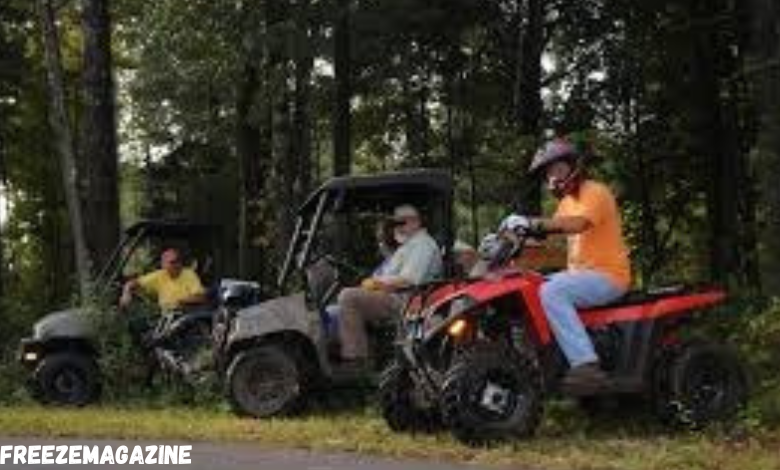
If you’re researching street legal ATV Texas rules, you’re not alone. Texas riders often want a simple answer, yet the reality is more nuanced: most ATVs are built for off-highway use, and on-road operation is generally restricted, with a handful of defined exceptions and local authorizations. The good news is that, in the right situation, you can set up an ATV for limited legal roadway use if you follow the rules precisely.
Just as important, many owners are also searching for how to register atv without a title because paperwork is missing, the seller never provided a proper title, or the ATV came from an auction or private sale. That’s a solvable problem, but it requires the correct process.
If you want a handled-for-you path through registration and paperwork options, including Montana solutions where appropriate, 1 Dollar Montana helps with all types of vehicle registration scenarios, especially when the documentation side is complicated, and you want a compliant, streamlined outcome.
What “Street Legal” Really Means in Texas
Most people use “street legal” to mean “I can drive it like a car anywhere.” In Texas, that is not how ATVs work.
In practice, street legal ATV Texas usually means one of these limited, lawful situations:
• Your city or county has authorized off-highway vehicles on certain roads (typically lower-speed roads).
• You’re using an ATV for a narrow, defined purpose allowed by law (for example, certain work-related uses or specific exceptions).
• You are crossing a roadway at an intersection under the rules (not free-driving down the highway).
Texas recognizes off-highway vehicles (ATVs/ROVs/UTVs/sand rails) as vehicles the state must title, but they are generally not eligible for standard registration like passenger cars. Instead, Texas offers an Off-Highway Vehicle license plate for certain on-road situations, obtained through your county tax assessor-collector.
The Two Big Buckets: Where You Ride Changes Everything
1) Public off-highway vehicle land or OHV “legal venues.”
If you’re riding on public off-highway vehicle land or grant-supported OHV venues, Texas requires an OHV decal and certain minimum equipment (brakes, muffler, spark arrester, headlight/taillight).
Key point: Texas discontinued the old TxDOT ATV registration decal for off-highway use, but the TPWD OHV decal still matters for OHV venues and public lands where it’s required.
2) Public roads (the “street legal” question)
This is where most confusion lives. Texas allows on-road operation only in listed situations, and often requires the Off-Highway Vehicle license plate (and may require a slow-moving emblem at lower speeds).
When an ATV Can Be Operated on Roads in Texas
According to TxDMV’s published guidance for off-highway vehicles, ATVs/ROVs/UTVs/sand rails with an Off-Highway Vehicle license plate may be operated on roads in specific situations, including:
• In a master-planned community, meeting certain criteria
• On certain low-speed roads for limited travel to/from a golf course (with distance and daytime limits)
• To cross intersections (including where the posted speed limit is above 35 mph, crossing is not the same as traveling along that road)
In addition, cities and certain counties may authorize operation on roads within their boundaries or unincorporated areas, but operation is generally limited to roads 35 mph or less, and the vehicle must display the OHV plate on roads authorized by the city/county.
If operated on roads at 25 mph or less, the vehicle is required to display a slow-moving vehicle emblem.
Limited operations that may be allowed without a plate (still restricted)
TxDMV also describes situations where these vehicles may be operated on roads without the issuance of an OHV plate, typically involving government ownership/public safety, agriculture/ranching, utility work, or emergency services, with strict distance/daytime constraints and added visibility requirements.
This is exactly why the phrase street legal ATV Texas can be misleading: legality depends on why, where, and how the ATV is being used, not just whether you added parts to it.
Minimum Equipment: What Texas Expects (and Why It Matters)
If you are operating on public off-highway vehicle land, TxDMV lists minimum equipment items such as:
• Brake system
• Muffler system
• U.S. Forest Service qualified spark arrester
• Headlight and taillight
• TPWD OHV decal
Separately, Texas law also addresses required equipment and lighting standards for ATVs on public property (and restrictions on exhaust/spark arresters in certain contexts).
For on-road scenarios under local authorization, you should treat equipment as a safety baseline, then verify any local ordinance requirements as well.
If your goal is a compliant solution without chasing forms, offices, and exceptions, 1 Dollar Montana supports customers with all types of vehicle registration needs, especially when the documentation is messy, you have out-of-state variables, or you need a clear, step-by-step plan that avoids preventable errors. You’ll save time, reduce rejections, and keep the process aligned with the rules that actually apply to your situation.
Step-by-Step: How to Make an ATV “Street Legal” for the Allowed Use Cases
Use this workflow to reduce risk and avoid wasted fees.
Step 1: Confirm the roadway scenario you’re actually trying to achieve
Ask: Are you trying to drive around a neighborhood, reach a trail, cross intersections, or operate under a county/city OHV ordinance?
Start with your city/county rules because TxDMV explicitly ties broader road access to local authorization in many cases.
Step 2: Make sure you can title the ATV in Texas
Texas requires titling for off-highway vehicles, processed through your county tax assessor-collector.
If you bought it out of state (especially new), Texas may require proof of use tax payment to title the OHV.
Step 3: Obtain the Off-Highway Vehicle license plate (when needed)
The OHV plate is obtained at the county tax assessor-collector’s office. TxDMV explains that off-highway vehicles are eligible for this plate even though they are not eligible for standard registration.
Step 4: Add required equipment and visibility items
At minimum, plan for brakes, muffler, spark arrester, headlight/taillight, and any slow-moving emblem/flag requirements that apply to your usage.
Step 5: Get the TPWD OHV decal if you ride OHV venues/public lands
TPWD’s OHV decal is sold for use on OHV-legal venues on public lands and grant-funded areas, and TPWD publishes the validity period and price.
Step 6: Follow the operating limits exactly
Texas rules hinge on constraints like:
• Daytime-only operation for certain exceptions
• Maximum posted speed limits (often 35 mph or less)
• Distance-from-origin limits (in specific exceptions)
This is the compliance heart of street-legal ATVs in Texas; most enforcement issues arise from people operating outside the allowed conditions.
Comparing States (and Why It Confuses Riders)
A common reason Texans get mixed signals is reading posts about other states. For example, people often search are atvs street legal in California and then assume Texas must work the same way. In reality, each state sets its own definitions, equipment rules, and allowed roadway contexts. So you should treat out-of-state guidance as informational only and validate Texas rules independently through TxDMV/TPWD and your local ordinances.
What If You Don’t Have a Title?
This is where many ATV purchases go sideways. If you’re serious about street legal ATV Texas, you should treat the title as non-negotiable, because counties commonly require the vehicle to be titled before issuing plate-related privileges, and you’ll need clean ownership documentation to reduce future risk.
Practical options when the title is missing
Your realistic paths typically include:
• Get the seller to provide the proper title (best-case scenario)
• Pursue a bonded title process when ownership documentation exists, but the title chain is broken
• Use a tax assessor-collector hearing route (in certain fact patterns)
TxDMV publishes a “Bought a Vehicle Without a Title?” process that explains the bonded title workflow, including obtaining a Notice of Determination and applying through your county tax office within the required timelines.
Common bonded title documentation includes forms like VTR-130-SOF and the standard 130-U application, as referenced by TxDMV materials.
Mistakes to avoid
• Paying for upgrades before the ownership paperwork is finalized
• Assuming a bill of sale alone is sufficient for every scenario
• Relying on “registration-only” shortcuts that don’t create clear ownership
Quick Checklist: “Street Legal” Readiness for Texas (Allowed Use Cases)
Use this to evaluate whether you’re actually ready for street legal ATV Texas operation, where permitted:
• Clear proof of ownership and a Texas title path
• OHV plate obtained (when your scenario requires it)
• TPWD OHV decal if you ride OHV public lands/venues
• Brakes, muffler, spark arrester, headlight/taillight
• Slow-moving emblem/flag where required by your operating conditions
• Local city/county authorization confirmed (if relying on ordinance-based road access)
FAQs
Are ATVs “registered” in Texas like cars?
Texas must title off-highway vehicles, but they are generally not eligible for standard registration; instead, they may qualify for an OHV plate for defined road situations.
Do I need an OHV decal?
If you operate an OHV at an OHV legal venue located on public lands or grant-funded lands, TPWD requires the OHV decal and publishes purchase/validity details.
Can I just add lights and make it street legal everywhere?
No. Equipment helps, but Texas legality hinges on the specific authorized situations and local approvals described by TxDMV, plus operating constraints like speed limits, daytime operation, and distance limits in certain cases.
Bottom-line
If you want street-legal ATV Texas capability, approach it as a compliance project, not a parts project. Texas allows limited on-road operation in specific scenarios often tied to local authorization and frequently requires an Off-Highway Vehicle license plate, plus defined safety/visibility standards.
Just as critical: solve ownership documentation early. If you’re dealing with missing paperwork, the bonded title route is a common path, and TxDMV provides formal steps and forms for “no title” situations.
If you want a done-for-you solution, especially when the paperwork is confusing, out-of-state variables exist, or you’re trying to reduce rejections, 1 Dollar Montana can help you navigate vehicle registration options and documentation requirements efficiently and correctly, so you can focus on riding instead of chasing forms.








Post Comment