The Answer-First Blueprint for Instant AEO Authority
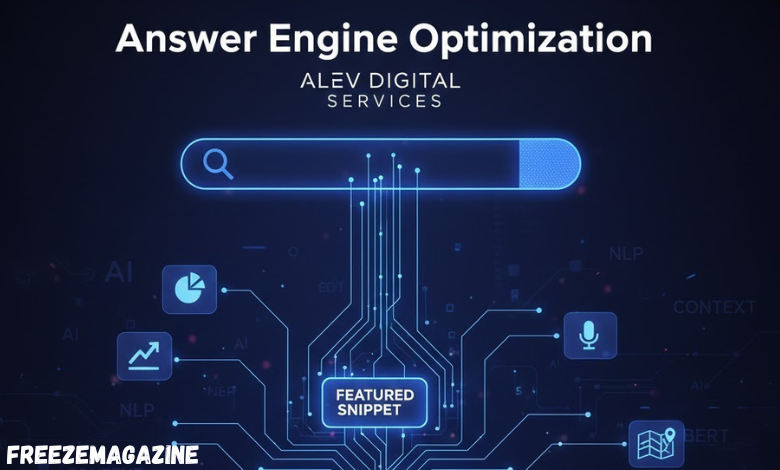
Your customers are not searching anymore. They are asking questions. The answers they receive from ChatGPT, Gemini, Claude, and Google’s AI Overviews shape their buying decisions before your brand enters the conversation. Traditional search optimization positioned you on page one. Answer Engine Optimization (AEO) positions you as the authority when AI models formulate responses. If you are still optimizing content around keywords rather than around answers, you are missing opportunities.
The shift is measurable and immediate. ChatGPT processes over a million queries each day. Gemini, Claude, and Perplexity route purchasing decisions away from traditional search results entirely. The question is not whether AI will influence your customer’s journey. The question is whether your brand will be part of the answer when they ask.
Why Answer-First Thinking Changes Everything
The fundamental difference between SEO and AEO lies in their intent architectures. Search engines match keywords to pages. AI assistants evaluate whether your content deserves to be the answer. The older strategies built around keyword densities, meta descriptions, and backlink volume take a back seat to a new priority.
AI models do not care about your keyword strategy: high volume, low difficulty, and commercial or transactional intent. They care about signal clarity, source credibility, and completeness of the answer. the AI is not crawling for “marketing plan” mentions. It evaluates which sources demonstrate genuine expertise, have third-party validation, and provide answers structured in a way machines can parse and trust.
This is why brands with mediocre SEO rankings suddenly appear in AI recommendations while companies with dominant search positions get ignored. The game is no longer about playing with algorithms. It is about becoming the definitive source that AI models reference when users need answers in your domain.
The Three Pillars of Answer-First Authority
Pillar 1: Answer Completeness Over Keyword Coverage
AI assistants prioritize comprehensive answers over keyword optimization. Your content needs to address not just the surface question but also the follow-up questions users will ask. If someone asks about marketing automation tools, AI wants to know what problems they solve, who they are best for, how they compare, what they cost, and what real users say.
Your content should be structured as answer clusters rather than isolated blog posts. Instead of writing “10 Marketing Automation Tips,” create a resource hub that answers every related question a buyer would have. AI models reward depth and interconnection. They penalize thin content that optimizes for clicks but fails to deliver substance.
One of the most effective ways to build answer clusters is by addressing the actual questions your audience asks. When you analyze search queries, customer support tickets, and sales conversations, you discover patterns of related questions that naturally cluster together. For example, someone researching “email marketing platforms” will inevitably ask “how much does email marketing software cost,” “what features should I look for,” “how do I migrate my contacts,” and “which platform integrates with my CRM.
Creating comprehensive FAQ sections that address these interconnected questions signals to AI that you understand the complete context of user intent. Structure these FAQs with clear question-and-answer formatting. Implement FAQ schema markup to make the content machine-readable. Ensure each answer provides substantive value rather than superficial responses.
Pillar 2: Structured Credibility That Machines Understand
AI evaluates whether you are qualified to be cited through signals most brands ignore. Schema markup helps crawlers understand page structure. Author credentials establish human authority. Citation patterns from trusted sources validate claims. Consistent information across the web reinforces credibility.
Schema markup provides structured data for search engines and crawlers. The organization schema establishes your company as an entity. Article schema identifies headlines, authors, and dates. FAQ schema structures Q&A content for easier parsing. The Speakable schema identifies content optimized for voice assistants such as Google Assistant, Siri, and Alexa. When implemented on key passages, voice assistants can read those sections aloud. Structure speakable content into 20- to 30-second segments, focusing on direct answers.
While schema helps crawlers understand structure, AI engines analyze your visible content and external validation. They examine citations and referrals from authoritative sources. If you claim expertise in demand generation, AI looks for evidence. Do industry publications cite you? Do third parties validate your expertise? When credible external sources point to substantive content, AI treats your pages as reference-grade material. When they do not, AI scrolls past.
Pillar 3: Independent Validation Beyond Your Properties
The brands dominating AI recommendations build authority across the ecosystem. They publish original research that others reference. They contribute expert insights to industry publications. They earn mentions in contexts where they are not promoting themselves. AI notices when multiple independent sources point to the same conclusion.
Quality citations serve dual purposes. For traditional search, backlinks from authoritative domains signal trust to Google’s algorithm, improving organic rankings. For answer engines, these same citations serve as validation points that AI models use when determining which sources deserve to be referenced. When ChatGPT, Gemini, or Claude encounter your brand mentioned across Forbes, industry journals, or academic papers, they classify your content as credible and citation-worthy.
This is why traditional link building fails at AEO. Buying backlinks does not create genuine authority signals that AI trusts. What works is becoming citation-worthy. Publish data that others reference. Create frameworks others adopt. Share insights that industry voices amplify. When your brand appears in ChatGPT’s training data through legitimate third-party mentions, you become part of AI’s answer set.
Making It Actionable: The Answer-First Checklist
Optimizing for AEO requires coordinated improvements across your content, technical infrastructure, and brand presence. Follow this step-by-step checklist to build a comprehensive answer-first authority.
1. Content Audit and Optimization
- Audit existing content: Does it answer specific questions completely? Is it structured for AI parsing? Would AI cite it over competitors?
- Restructure content to align with answer intent using “People Also Ask” boxes, ChatGPT suggestions, and customer support data.
- Create comprehensive answer clusters that address primary questions and related follow-ups.
2. Technical Website Implementation
- Implement Organization, Article, FAQ, HowTo, and Speakable schema markup.
- Structure content with clear heading hierarchies and distinct question-answer pairs.
- Verify technical SEO foundations: page speed, mobile responsiveness, and clean URLs.
3. Brand Authority Building
- Contribute guest commentary to industry publications and publish original research.
- Create citation-worthy frameworks, tools, or data that others naturally reference.
- Speak at industry events to build independent validation signals.
4. Tracking and Measurement
- Track AI visibility across ChatGPT, Gemini, Claude, and Google AI Overviews systematically.
- Monitor citation frequency, referral traffic from AI platforms, and conversion rates.
At Alev Digital, we help brands measure and improve visibility across all major AI platforms through comprehensive AEO strategies
The Reality Check
AEO is not replacing traditional SEO. It is evolving it. Search engines still drive the majority of web traffic, and strong SEO services remain foundational. These are not just informational queries anymore. They are pre-purchase research, vendor comparisons, and buying decisions.
The opportunity window is narrow. Right now, most categories still have room for new voices to establish authority in AI answer sets. As more brands adopt answer-first strategies, the competition for AI citations will intensify. The question is not whether to prioritize AEO. The question is whether you will do it while the advantage is still available. When AI evaluates the best answer in your domain, it should find you.
Frequently Asked Questions (FAQs)
Is different content needed for each AI platform?
No, high-quality, structured, and authoritative content works across all AI platforms. Rather than focusing on platform-specific tweaks, prioritize creating comprehensive and well-organized content with proper schema markup and independent validation to ensure broad effectiveness.
What is the distinction between SEO and AEO?
SEO (Search Engine Optimization) aims to improve rankings on search engine results pages. In contrast, AEO (AI Optimization) is geared towards enhancing visibility in AI-generated responses across platforms like ChatGPT, Gemini, Claude, and other AI services. AEO seeks to be the primary source cited in AI-driven answers.
How long does it take to notice results from AEO?
You may see initial improvements in visibility within 2 to 4 weeks with technical optimizations. However, substantial traffic and recognition of your content by AI models can take anywhere from 6 to 12 weeks as they start acknowledging your authority and references.
Can AEO be effective without strong SEO?
No, AEO is built upon a strong SEO foundation, including aspects like site organization, quality content, and backlinks. Without robust SEO, AI systems lack the credible signals necessary to evaluate and reference your content properly.
Which AI platforms should I prioritize for optimization?
Begin by focusing on ChatGPT and Google’s AI Overviews, as these platforms have the largest user bases. Afterward, consider expanding to other platforms like Gemini, Claude, and Perplexity, depending on where your audience is engaging the most.
How do I track the success of AEO?
Measure AEO effectiveness by monitoring how often your content is cited in AI-generated answers, the amount of traffic referred from AI platforms, the visibility of your keywords across various AI tools, and the conversion rates of visitors coming from AI versus traditional search results.






Post Comment