How to Choose the Best Office Chair for Home: A Decision Framework for Indian Buyers
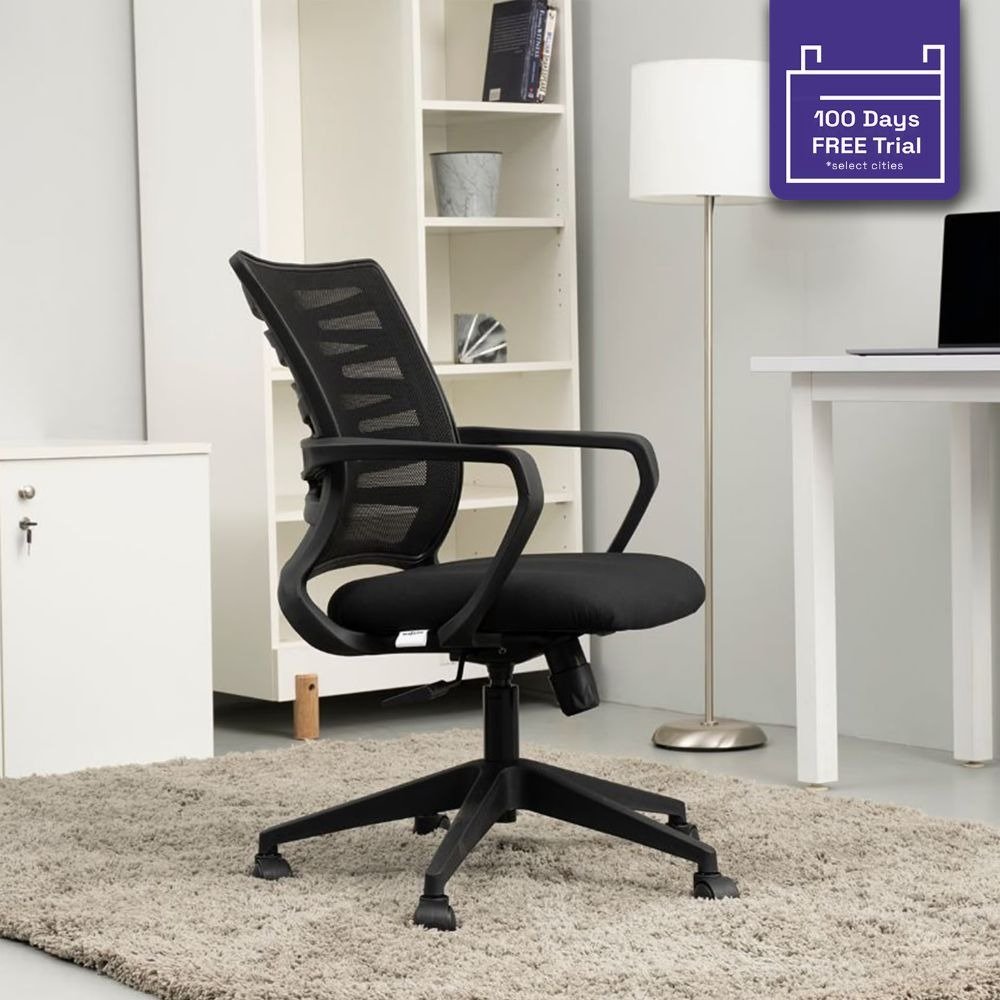
Most best office chair lists are built for corporate procurement teams – bulk buyers choosing fifty identical chairs for a commercial floor. The criteria they use (multi-user durability, fleet warranty, standardised dimensions) have almost nothing to do with what makes a chair right for one person in a home office in India. The right framework starts with three questions: how many hours you sit per day, whether your height is above or below 5’6”, and what type of floor your home has. Those three answers narrow the choice better than any brand comparison.
Why doesn’t standard office chair advice work for Indian home buyers?
The first problem is body dimensions. Most office chairs are designed around a Western body range. The average male height in India is around 5’5” – shorter than the design spec of most international chairs. The average female height is closer to 5’1”. Chairs designed for an international average seat depth, gas lift range, and backrest height will not be correctly proportioned for a significant portion of Indian buyers. The chair that gets glowing reviews in a foreign market may give an Indian user a seat pan that’s too long, armrests that sit too high, and a gas lift that doesn’t lower far enough.
The second problem is floor type. Home offices in India typically have marble, granite, or ceramic tile floors. Corporate offices have carpet. Nylon casters – the standard on most office chairs – roll poorly on hard smooth surfaces and scratch floors over time. Rubber casters grip hard floors correctly and prevent surface damage. This is a check that almost no standard review mentions, because reviewers write for carpeted environments.
The third problem is session length. Working from home removes the incidental movement that breaks up office sitting – walking between floors, going to meeting rooms, standing at a colleague’s desk. WFH professionals sit in longer uninterrupted stretches than most office workers. That changes the requirements on foam density, lumbar support, and back breathability in ways a corporate chair review won’t reflect.
What three variables actually determine which home office chair is right for you?
| Variable | Below Threshold | Above Threshold | What It Changes |
| Sitting hours per day | Under 4 hours | 6 or more hours | Foam density, lumbar adjustability, and mesh back become non-negotiable above threshold |
| User height | Under 5’6” | 5’6” and above | Seat depth, gas lift minimum range, and backrest height all need to match the shorter user’s dimensions |
| Home floor type | Marble, granite, or tile | Carpet or wood | Rubber casters needed for hard smooth floors – nylon casters standard on most chairs perform poorly and cause scratching |
These three inputs – not brand name, not design, not the number of adjustability features listed – determine whether a chair actually fits your use. A 5’3” person on a marble floor doing eight-hour WFH days has a completely different requirement from a 5’11” person doing occasional three-hour sessions on a wooden floor. Standard reviews treat both buyers as identical.
Which features become non-negotiable for home office sessions of six hours or more?
Adjustable lumbar support – height and depth, both. A fixed foam bump will make contact with your spine at one position. As your posture naturally shifts over eight hours, it loses contact. Lumbar height and depth adjustment means you can restore contact without resetting your entire sitting position. This is not a premium feature – it’s the baseline for long sessions.
Breathable mesh back. Indian homes are warmer and less ventilated than corporate offices with central air conditioning. A foam or PU leather backrest generates heat buildup within two to three hours. That heat triggers postural shifting, which breaks lumbar contact, which defeats the support system. A quality mesh back removes this chain of failure. In an Indian home office, this is not optional above four hours per day.
Seat depth adjustment. For anyone below 5’6”, a standard seat depth pushes the front edge of the seat into the back of the calves, forcing the user to slide forward and away from the backrest. When you’re sitting away from the backrest, no lumbar support can reach you regardless of how well it’s positioned. Seat depth control is the most commonly absent feature in the Rs 8,000-12,000 range and the most consequential one for users at or below Indian average height.
How does your height change which home office chair you should buy?
| User Height | Priority Requirement | What to Check on Spec Sheet |
| Under 5’2” | Gas lift minimum below 42cm, short seat depth, low armrest minimum | Gas lift range (minimum height), whether seat depth is adjustable |
| 5’2” to 5’6” | Seat depth adjustment present, lumbar height range starting low | Presence of seat depth slider – not listed on many chairs below Rs 14,000 |
| 5’6” to 5’10” | Standard spec mostly works – confirm seat depth isn’t too shallow | Seat width and backrest height measurement |
| Over 5’10” | Taller backrest (above 55cm), wider seat, higher gas lift maximum | Backrest height in cm, gas lift maximum range |
Why does your home floor type affect which office chair is right?
Nylon casters are harder and roll freely on carpet, which provides enough resistance to slow the roll naturally. On marble or tile, nylon rolls with almost no friction – the chair moves when you don’t want it to, which creates constant micro-adjustments in your posture throughout the day. Over months, this low-level instability contributes to fatigue and back discomfort in ways that are easy to attribute to the wrong cause. Nylon casters also scratch polished marble and tile surfaces over time.
Rubber casters provide grip on smooth hard floors and don’t damage surfaces. Most office chairs sold in India ship with nylon casters by default, even though the majority of Indian home offices have hard smooth floors. This is worth checking before buying – some manufacturers offer rubber casters as a variant or include soft-roll casters as standard. Replacement caster sets are also available if the chair you want doesn’t come with the right type.
What price range actually covers the full home office chair requirement in India?
| Budget | What You Get | What’s Typically Missing |
| Under Rs 8,000 | Basic gas lift, fixed lumbar, no seat depth control | Not suitable for daily use above 4 hours |
| Rs 8,000-12,000 | Adjustable lumbar height, mesh option, basic recline | Seat depth adjustment usually absent – main gap at this tier |
| Rs 12,000-18,000 | Lumbar height and depth, mesh back, seat depth slider, 2D arms | Syncro-tilt may not be present, but core spec is covered |
| Rs 18,000-25,000 | Full spec – syncro-tilt, 4D arms, complete adjustability | Minimal trade-off at this range for a single home user |
| Rs 25,000+ | Commercial-grade durability, extended warranty | Paying for multi-user durability that a home user won’t need |
For a single user doing six or more hours daily on a hard floor at or below 5’6”, the minimum useful spec starts at Rs 14,000-18,000 from a quality domestic brand. Below that threshold, at least one of the three non-negotiables (lumbar depth, seat depth, mesh back) is typically absent. Above Rs 25,000, the increment pays for commercial durability designed for multiple users over many years – a use case that doesn’t apply to a home buyer.
How do you verify an online listing before buying a home office chair in India?
Most Indian buyers choose office chairs online without sitting in them first, which makes spec verification critical. The first check is material terminology: ‘mesh back’ can mean a full tensioned mesh across the entire backrest or a partial mesh panel on an otherwise foam-padded back. These perform very differently for heat management across a long session. Ask for a back-panel photo from the inside, or look for a description that specifies the mesh covers the full back surface.
The second check is the weight rating against the mechanism, not just the seat. A chair rated to 100 kg can still have a gas lift piston rated to 80 kg – the seat takes your weight, but the lift fails faster. Look for the piston rating specifically rather than the chair’s maximum load capacity, since the two numbers don’t always match in lower-tier listings.
Third: confirm the return policy window before ordering. A 7-30 day return window lets you complete at least one full week of real sessions before committing. Discomfort in a mismatched chair shows up in hours 3-5, not in the first twenty minutes. A chair that feels adequate during a brief unboxing test will not reveal postural mismatch until you’ve been in it for a full working session.
In the Rs 15,000-25,000 domestic range, an office chair for home that covers all three variables should have full mesh, lumbar adjustable in both height and depth, a seat depth slider, and syncro-tilt with resistance settings. If you’re shortlisting options, those four features on the spec sheet confirm the chair is built for the home use case – single user, long sessions, Indian climate conditions.









Post Comment