Clear Vision Ahead Understanding Cataract Surgery and What to Expect
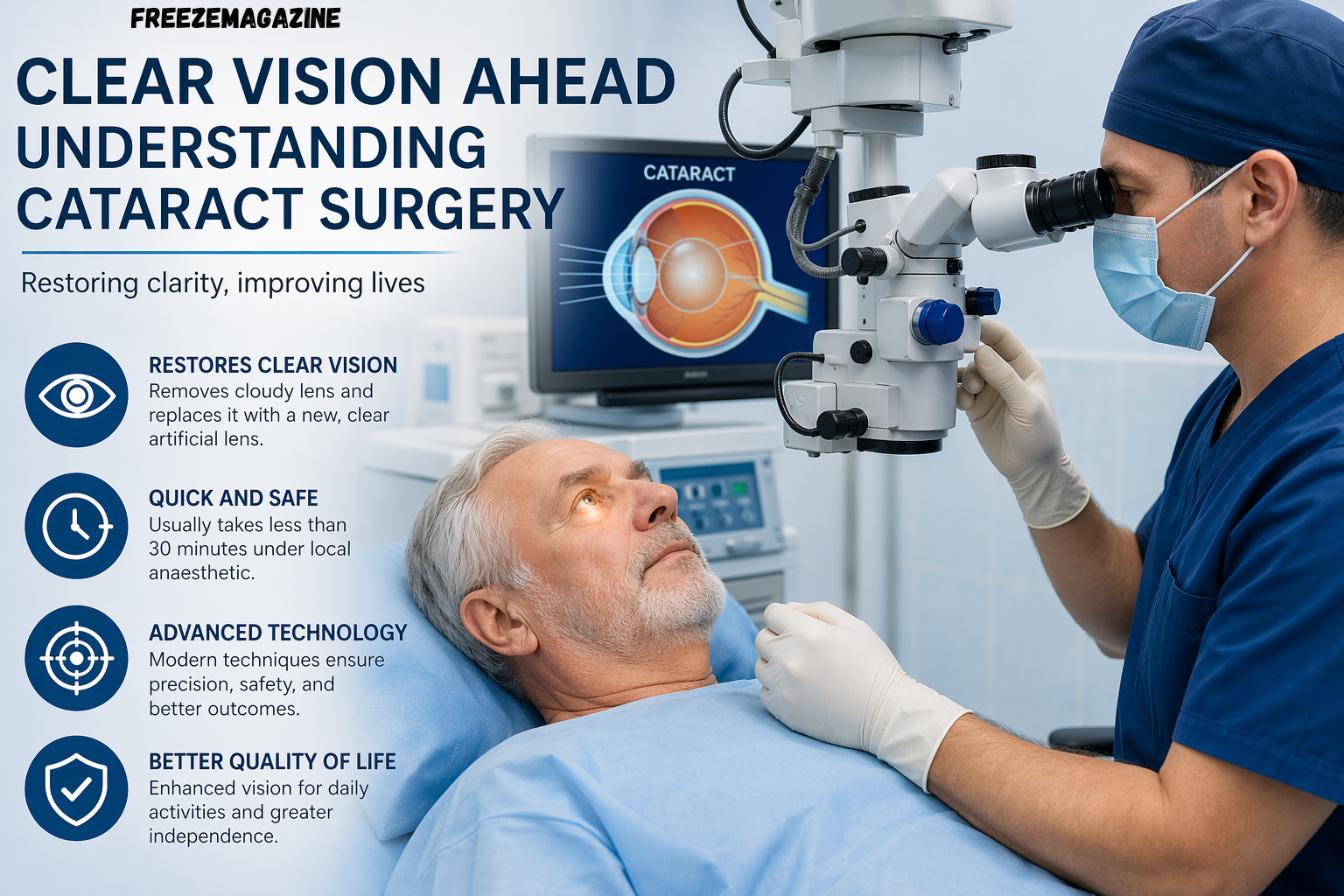
Vision changes can be frustrating, especially when everyday tasks like reading or driving start to feel difficult. One of the most common reasons behind this is cataracts, a condition that causes the natural lens of the eye to become cloudy. Many people turn to cataract surgery as a reliable way to restore clarity and improve quality of life.
What Is Cataract Surgery
Cataract surgery is a medical procedure designed to remove the cloudy lens inside the eye and replace it with a clear artificial lens. This artificial lens, often called an intraocular lens, helps restore sharp vision. The procedure has become highly refined over the years and is one of the most commonly performed surgeries worldwide, with a strong safety record.
The main goal of cataract surgery is simple, remove the obstruction that is affecting vision and allow light to pass through the eye properly again. Patients often notice a significant improvement in brightness, contrast, and overall clarity soon after the procedure.
Signs You May Need Cataract Surgery
Cataracts develop gradually, which means symptoms can appear slowly and worsen over time. Recognizing the signs early can help in planning timely treatment.
Common symptoms include:
- Blurry or cloudy vision
- Difficulty seeing at night
- Increased sensitivity to light
- Seeing halos around lights
- Colors appearing faded or yellowed
- Frequent changes in prescription glasses
When these symptoms begin to interfere with daily life, cataract surgery is commonly recommended when vision problems begin to significantly affect daily life.
How Cataract Surgery Works
Understanding the process can make the idea of surgery less intimidating. Cataract surgery is typically performed as a day procedure, meaning patients can return home the same day.
Here is how it usually works:
- The eye is numbed using local anaesthetic, ensuring comfort throughout
- Advanced tools break up the cloudy lens into small fragments
- The fragments are gently removed
- A clear artificial lens is placed in the same position
The procedure is typically completed within 20 to 30 minutes, although this can vary depending on the case.. Because of modern technology, the incision is so small that stitches are rarely needed.
Types of Artificial Lenses
One of the key aspects of cataract surgery is choosing the right intraocular lens. Different options are available depending on lifestyle and vision needs.
Monofocal Lenses
These lenses provide clear vision at one distance, usually far. Glasses may still be needed for reading.
Multifocal Lenses
These allow for vision at multiple distances, reducing the need for glasses.
Toric Lenses
Designed for patients with astigmatism, these lenses correct uneven curvature in the eye.
The choice of lens is often discussed during the consultation phase, ensuring the best possible outcome tailored to each individual.
Benefits of Cataract Surgery
Cataract surgery offers more than just clearer vision. It can have a significant impact on overall well-being.
Some key benefits include:
- Improved ability to perform daily tasks
- Enhanced night vision and reduced glare
- Brighter and more vivid colors
- Increased independence
- Better quality of life
Many patients report noticeable improvements in daily activities after surgery, especially after struggling with vision problems for years.
Recovery and Aftercare
Recovery from cataract surgery is generally smooth and quick. Most people notice improved vision within a few days, although full healing may take a few weeks.
- Use prescribed eye drops regularly
- Avoid rubbing the eyes
- Protect the eye from dust and water
- Wear protective eyewear if recommended
- Attend follow-up appointments
Following these steps helps ensure proper healing and reduces the risk of complications.
Is Cataract Surgery Safe
Cataract surgery is generally considered safe and has a high success rate, though outcomes can vary and risks, while uncommon, still exist. Advances in medical technology and surgical techniques have made complications rare.
That said, like any medical procedure, it requires proper assessment and skilled care. Choosing a qualified eye specialist and attending all follow-up visits helps maintain safety and effectiveness.
When to Consider Surgery
There is no strict rule about when cataract surgery should be done. It largely depends on how much the cataract is affecting daily life.
Some people choose surgery early to maintain an active lifestyle, while others wait until vision becomes more limiting. An eye specialist can guide the timing based on individual needs and eye health.
Modern Advancements in Cataract Surgery
Today’s cataract surgery is far more advanced than it was even a decade ago. Techniques such as laser-assisted procedures and precision imaging allow for highly accurate results.
These innovations contribute to:
- Greater surgical precision
- Faster recovery times
- Improved visual outcomes
- Customized treatment plans
With ongoing improvements, cataract surgery continues to evolve, offering patients safer and more effective solutions.
Living with Clearer Vision
After successful cataract surgery, many people find themselves rediscovering everyday moments. Reading becomes easier, colors appear more vibrant, and activities that once felt difficult become enjoyable again.
From driving at night to recognizing faces clearly, the impact can be immediate and noticeable. It is not just about seeing better, it is about experiencing life with renewed clarity and confidence.










Post Comment