Laser Micro Welding vs Traditional Soldering: Why Indian Precision Tech is Leading the Global Shift
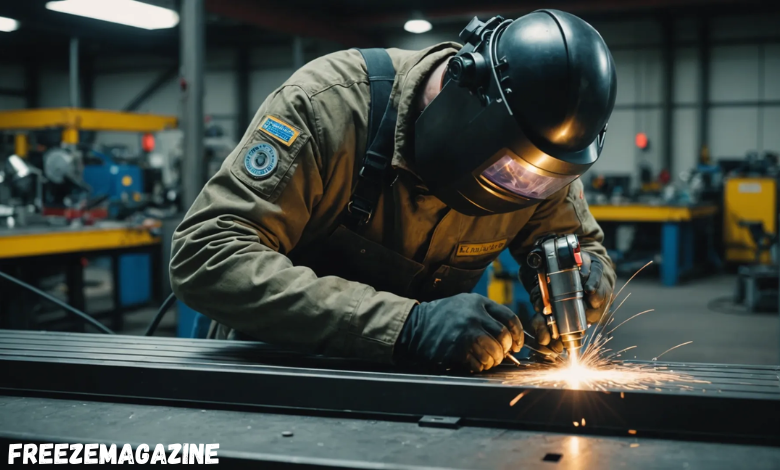
Manufacturing precision has become the determining factor in competitive electronics production, where component miniaturization demands joining techniques that maintain structural integrity at microscopic scales. Traditional soldering methods, while proven over decades, face inherent limitations when applied to today’s densely packed circuit boards and ultra-thin components. The heat-affected zones created by conventional soldering can compromise adjacent components, while flux residues introduce long-term reliability concerns in sealed electronic assemblies.
The operational stakes have intensified as product lifecycles shorten and failure tolerance approaches zero. Electronics manufacturers now balance production speed against precision requirements, knowing that rework costs and field failures can eliminate profit margins entirely. This operational pressure has accelerated the adoption of laser-based micro welding technologies, particularly in markets where cost efficiency must align with technical capability.
Fundamental Differences Between Welding and Soldering Approaches
Laser micro welding creates metallurgical bonds by melting and fusing base materials directly, eliminating the need for intermediate filler metals that characterize soldering processes. This fundamental difference affects everything from joint strength to thermal management during assembly. The precision capabilities of micro weld india operations demonstrate how localized energy delivery can achieve fusion zones measured in micrometers, compared to the broader thermal footprints required for solder flow and wetting.
Traditional soldering relies on intermetallic compound formation between the solder alloy and base materials, creating joints that depend on proper surface preparation and flux chemistry. The process requires sustained heating to achieve adequate solder flow, which inevitably affects surrounding components. Laser welding, conversely, delivers energy in precise pulses that can be positioned with sub-micron accuracy, allowing operators to join materials without affecting nearby elements.
The speed differential between these methods becomes critical in high-volume production environments. Soldering operations typically require preheating, flux application, solder placement, and cooling phases that extend cycle times. Laser micro welding can complete comparable joints in milliseconds, though the equipment and setup complexity require different operational considerations.
Material Compatibility and Joint Characteristics
Soldering works effectively across a broad range of material combinations, particularly when joining dissimilar metals that might prove challenging for direct welding approaches. The lower processing temperatures of soldering operations preserve the metallurgical properties of base materials, making the technique suitable for temperature-sensitive components and assemblies.
Laser micro welding excels with similar materials where direct fusion creates stronger metallurgical bonds than achievable through intermetallic compound formation. The absence of filler materials eliminates concerns about solder joint fatigue and thermal cycling failures that can affect long-term reliability in demanding applications.
Thermal Management and Component Protection
The controlled heat input of laser welding allows manufacturers to work closer to sensitive components without risking thermal damage. Pulse duration and power density can be adjusted to minimize heat-affected zones, while the rapid cooling inherent in laser processes reduces the time that adjacent areas remain at elevated temperatures.
Soldering processes, particularly when applied to dense assemblies, require careful thermal profiling to ensure adequate solder flow without overheating components. The thermal mass of larger assemblies can complicate temperature control, potentially requiring extended heating cycles that increase the risk of component damage.
Production Scalability and Quality Consistency
Manufacturing scalability depends heavily on process repeatability and the ability to maintain quality standards across production volumes. Laser micro welding systems offer programmable parameters that can be stored and recalled for consistent results across production runs. Once established, laser welding parameters remain stable, reducing the variability that can affect manual or semi-automated soldering operations.
The automated nature of laser systems eliminates operator skill variations that can impact solder joint quality. Traditional soldering, particularly in precision applications, relies heavily on operator technique for flux application, temperature control, and solder placement. While skilled operators can achieve excellent results, maintaining consistency across shifts and production volumes requires extensive training and quality control measures.
Inspection and quality verification also differ significantly between the two approaches. Laser welds can be evaluated through automated optical systems that detect joint characteristics and defects with high precision. Solder joints often require more complex inspection methods to evaluate hidden defects like voids or inadequate intermetallic formation.
Equipment Investment and Operational Costs
The initial capital requirements for laser micro welding systems exceed those of traditional soldering equipment by substantial margins. However, the operational cost structure shifts dramatically when considering material consumption, rework rates, and throughput capabilities. Laser systems eliminate ongoing costs for solder materials, flux chemicals, and consumable tips while reducing the labor content per joint.
Maintenance requirements also differ between the approaches. Soldering equipment requires regular tip replacement, flux system cleaning, and temperature calibration. Laser systems need periodic optical component cleaning and laser source maintenance, but these requirements are generally less frequent and more predictable than soldering equipment upkeep.
Indian Manufacturing Capabilities and Global Market Position
India’s electronics manufacturing sector has rapidly developed laser micro welding capabilities that compete directly with established production centers in East Asia and Europe. The combination of engineering expertise, cost-effective operations, and investment in advanced manufacturing technologies has positioned Indian facilities as viable alternatives for precision electronics assembly.
The technical workforce development in Indian manufacturing has focused particularly on laser applications and precision assembly techniques. This specialization has enabled Indian manufacturers to offer services that were previously concentrated in higher-cost manufacturing regions. The growth trajectory of India’s electronics sector reflects both domestic market expansion and increasing export competitiveness in precision manufacturing applications.
Government initiatives supporting advanced manufacturing technologies have accelerated the adoption of laser-based production methods across Indian electronics manufacturers. These policies have facilitated technology transfer and equipment investment that might otherwise have required longer development timelines.
Technical Service and Support Infrastructure
The development of local technical support capabilities has been essential for successful laser welding implementation across Indian manufacturing facilities. Unlike traditional soldering equipment that can often be serviced locally, laser systems require specialized technical knowledge and genuine optical components for proper maintenance.
Indian manufacturing regions have developed service networks that can provide rapid response for laser system maintenance and repair, reducing the production disruptions that can occur when technical support requires international coordination. This local capability has become a significant advantage for manufacturers evaluating production location decisions.
Application-Specific Performance Considerations
Different electronic assembly applications favor either laser welding or traditional soldering based on specific performance requirements. High-reliability applications such as aerospace electronics and medical devices often prefer laser welding for the superior joint strength and absence of flux-related contamination concerns. The hermetic sealing capability of laser welds becomes particularly important in applications where moisture ingress could cause long-term failures.
Consumer electronics applications with aggressive cost targets may continue favoring traditional soldering methods, particularly for larger components where the precision advantages of laser welding provide minimal benefit. The material costs and processing speeds of soldering remain attractive for applications where joint reliability requirements are less stringent.
Automotive electronics represent a growing application area where laser micro welding addresses the reliability demands of harsh operating environments. The vibration resistance and thermal cycling performance of welded joints exceed those of typical solder joints, making laser welding increasingly preferred for critical automotive electronic systems.
Quality Standards and Certification Requirements
Industry certification requirements increasingly recognize laser welding as a preferred joining method for critical applications. Military and aerospace specifications often mandate welded connections for applications where solder joint reliability cannot meet long-term performance requirements.
The traceability capabilities of automated laser welding systems align well with quality management systems required for certified manufacturing operations. Process parameter logging and real-time monitoring capabilities provide documentation that supports quality audits and regulatory compliance requirements.
Future Technology Development and Market Trends
The continued miniaturization of electronic components will likely accelerate the adoption of laser micro welding technologies as traditional soldering approaches reach practical limitations. Component pitch reductions and three-dimensional packaging architectures require joining methods that can operate in confined spaces without affecting adjacent elements.
Advances in laser technology continue to improve the cost-effectiveness of micro welding systems while expanding their capability ranges. Fiber laser developments have reduced system complexity and maintenance requirements while improving beam quality and power stability. These improvements make laser welding accessible to smaller manufacturers who previously could not justify the equipment investment.
The integration of artificial intelligence and machine learning into laser welding systems promises further improvements in process optimization and quality prediction. These technologies can automatically adjust welding parameters based on real-time feedback, potentially achieving quality levels that exceed those possible with fixed parameter sets.
Supply Chain and Material Considerations
The global supply chain disruptions experienced in recent years have highlighted the advantages of welding processes that eliminate dependence on solder alloys and flux chemicals. Laser welding systems can operate with minimal consumable materials, reducing exposure to supply chain interruptions that can halt production in solder-dependent facilities.
Environmental regulations affecting lead-containing solders and flux chemistries have also influenced the adoption of laser welding technologies. The elimination of chemical processing aids and potentially hazardous materials simplifies environmental compliance and waste management requirements.
Conclusion
The shift from traditional soldering to laser micro welding represents more than a simple technology upgrade—it reflects the manufacturing industry’s response to increasing precision requirements and reliability demands. While soldering retains advantages in specific applications, the operational benefits of laser welding align with the direction of modern electronics manufacturing.
Indian manufacturing capabilities in laser micro welding have developed rapidly, providing global manufacturers with cost-effective alternatives to established production centers. The combination of technical expertise, supportive infrastructure, and competitive operational costs positions India as a significant player in precision electronics assembly.
The decision between laser welding and traditional soldering ultimately depends on specific application requirements, production volumes, and quality standards. However, the trend toward laser-based processes appears likely to continue as component miniaturization and reliability requirements intensify across the electronics industry.










Post Comment