AI Music Generator Helps Lyrics Find Their Voice
Writing lyrics is a strange kind of work. On the page, everything can look fine. The lines scan well, the chorus repeats in the right places, and the idea feels emotionally clear. But the real test does not happen on the page. It happens when the words meet melody, rhythm, and a voice. That is why an AI Music Generator can be surprisingly helpful. It gives lyrics a faster path to sound, and that can change how a songwriter judges the work.
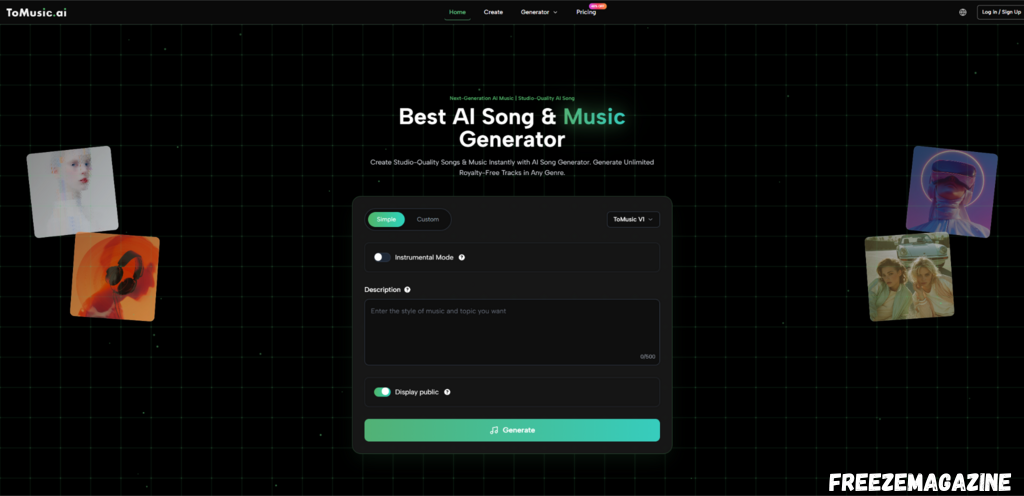
ToMusic stands out because it is not limited to one kind of user. A beginner can enter a simple prompt and see what happens. A lyric-first creator can move into a more custom workflow and guide the result more directly. That balance matters. Good creative tools usually do not force everyone into the same starting point. They give enough structure for new users and enough direction for people who already know what they want.
When I looked through the platform, what felt most useful was not the promise of instant perfection. It was the chance to hear possibilities quickly. A lyric draft that feels flat on paper may come alive with the right tempo and vocal tone. Another draft may reveal its weaknesses the moment it is sung. Either way, hearing the result helps.
Why Lyrics Need More Than A Blank Page
Lyrics can look complete long before they are emotionally ready. A line that reads well may be awkward when sung. A chorus that feels powerful in text may be too long once melody is involved. This is one reason many writers get stuck between drafting words and turning them into music.
ToMusic seems built to reduce that gap. The platform’s public pages describe support for custom lyrics, structured song generation, and control over voices, moods, and styles. That means the system is not only inventing songs from vague prompts. It also supports people who already have material and want to shape how it sounds.
Words Change When They Meet Rhythm
This is a simple point, but it matters. Lyrics are not finished just because they read well. Singing adds pressure to every syllable. Repetition feels different. Emotional emphasis shifts. Once a line is placed inside a musical structure, you can hear whether it breathes naturally or feels forced.
An AI music workflow can speed up that feedback loop. Instead of waiting for a full collaboration or recording session, the writer can test the emotional weight of the lyric much earlier.
A Vocal Draft Creates Useful Distance
Writers are often too close to their own words. Hearing a generated vocal can create a bit of distance. Suddenly the lyric feels less like private thought and more like an object you can edit. That change can be helpful. It makes revision feel less abstract.
The Song Starts Talking Back
A good draft, even an imperfect one, gives the writer something to respond to. You stop asking “Is this lyric good?” and start asking more practical questions: “Is the chorus too wordy?” “Should the mood be softer?” “Would a different tempo make this line land better?” Those are much easier questions to improve.
How ToMusic Supports A Lyric-First Workflow
The platform’s generator page and pricing pages together paint a fairly clear picture of how the system works for song creation. It is approachable, but it also includes several layers of control that matter to people working from lyrics rather than only from mood prompts.
Step One Chooses The Path Into Creation
ToMusic presents a simple mode and a custom mode. That makes sense. Some users want the platform to do more interpretive work, while others want direct influence over the result. If your main starting point is lyrics, the custom route appears to be the more relevant one because it gives you room to define the song more precisely.
Step Two Brings In Lyrics And Song Signals
The generator interface shows fields for title, styles, lyrics, and musical categories such as genre, moods, voices, and tempos. This matters because it suggests that lyrics are only one part of the instruction set. The user is also telling the system how the words should feel.
That combination is important. The same lyric can sound reflective, theatrical, intimate, or anthemic depending on the musical framing around it.
Step Three Uses Models To Shape The Result
ToMusic does not rely on one single model. Its public plan comparison mentions V1 and V2 as standard-quality music, V3 as stronger in harmonies and rhythms, and V4 as the flagship with the best vocals. For lyric-based work, that is a useful distinction. If the vocal delivery matters most, model choice becomes part of the writing process.
In my view, this is one of the more practical features on the site. It gives users a reason to experiment with how the same lyric behaves under different model strengths.
Step Four Keeps Drafts Inside A Searchable Library
The Music Library page says that every generated track is stored with metadata, including lyrics and generation parameters. This is more useful than it may sound at first. Songwriting often involves half-successful drafts that become valuable later. A track that feels wrong today may contain the right chorus shape or vocal mood for another project next month.
What ToMusic Offers Beyond Basic Generation
The product makes more sense when its features are translated into everyday benefits. A lot of platform language sounds promotional, but several details here are genuinely practical.
| Writing Need | ToMusic Capability | Why It Matters |
| Test lyrics quickly | Custom lyric input | Writers can hear words sooner |
| Adjust emotional framing | Mood, genre, tempo, and voice options | Helps the same lyric take on different identities |
| Explore better vocal results | Four models, including V4 for best vocals | Useful when delivery matters as much as wording |
| Save each attempt | Automatic library storage with metadata | Makes comparison and reuse easier |
| Use tracks outside the platform | WAV and MP3 downloads | Helps move drafts into other workflows |
| Edit generated output | Stem extraction and vocal removal on plan pages | Supports more selective revision |
| Work on longer songs | Up to 8-minute songs on higher tiers | Better for full compositions, not only short demos |
It Fits Writers Who Think In Phrases First
Some creators begin with beats. Others begin with melody. Many begin with lines. For that third group, traditional tools can feel oddly indirect. You have the lyric, but not yet the arrangement or voice that will reveal whether it works. ToMusic appears useful because it narrows that gap.
It Can Also Help Non-Musicians Hear Song Form
A lyric writer does not always know whether a section feels like a verse, pre-chorus, or chorus until it is heard in motion. A system that turns the text into an actual song draft can make structure more obvious. That can improve future writing, not just the current track.
What Still Depends On The Human Side
Even with a smooth workflow, the platform does not solve every songwriting problem automatically. It still depends on the user to give meaningful direction and to decide what is worth keeping.
Prompt Quality Still Shapes The Outcome
If the lyric is paired with weak style guidance, the output may sound generic. If the user gives clearer emotional and sonic direction, the result usually has a better chance of matching the lyric’s intent. This is one of the main realities of AI music creation. The tool can generate fast, but it still needs good creative signals.
Not Every Draft Deserves To Stay Final
This is actually a strength, not a weakness. ToMusic appears best when treated as a draft engine and comparison space, not as a guarantee that every click will produce a finished release. In many cases, the value is in discovering which version of the lyric feels most alive.
Revision Becomes A Listening Process
Once the words are sung, revision changes. You are no longer editing only for meaning. You are editing for breath, emphasis, memory, and sound. That makes songwriting feel more physical and immediate.
Why This Matters For Modern Songwriting
The biggest shift here is not that AI can make songs faster. It is that lyric-based creativity no longer has to wait for a full production environment before it becomes audible. That changes how people write, test, and improve.
ToMusic seems most meaningful in that space. It helps lyrics leave the notebook earlier. It helps writers hear what is working and what is not. And it turns the uncertain middle stage of songwriting into something more active: not endless wondering, but listening, comparing, and rewriting with real feedback. For people who think in words before they think in sound, that is a meaningful change.









Post Comment