Choosing a Private Autism Specialist in the West Midlands: What Really Matters
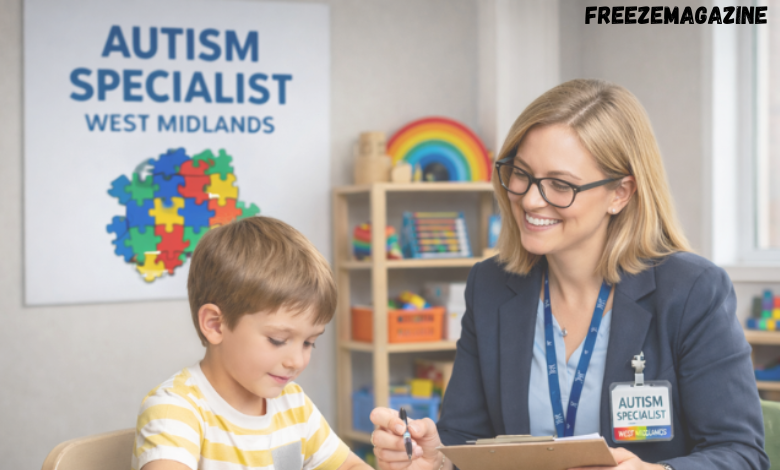
If you’re searching for an autism specialist in the West Midlands, you’re probably not doing it for fun. Something in daily life is snagging: school is becoming a battleground, work feels like a constant performance, or social stuff is exhausting in a way you can’t quite explain. Private assessment can bring quicker clarity, sure, but speed on its own doesn’t equal quality. What you really want is a careful, credible evaluation and a report that actually helps you move forward.
If you’re comparing local options right now, you can start here: autism specialist west midlands.
Private autism assessment in the West Midlands: why people go down this route
NHS diagnostic services can be excellent, and for many people they’re the right choice. The hard bit is waiting. Months can turn into years, and meanwhile, a child is sliding further behind at school, or an adult is burning out at a job they technically “can do” but can’t sustain.
Private assessment becomes particularly tempting across Birmingham, Coventry, Wolverhampton, Dudley, Walsall, Solihull, and nearby counties.
- Quicker answers, so life stops feeling like guesswork
- A clear, usable report for school, university, or work
- A clinician who understands masking, anxiety, or co-occurring ADHD
- More control over appointment format, including online sessions
- A calmer, more personalised experience than a rushed pathway
A strong autism specialist in the West Midlands will still adhere to recognized clinical standards, gather evidence appropriately, and be transparent about limitations.
What separates a solid clinician from a glossy website?
When people ask me how to choose an autism specialist in the West Midlands, I usually say, “Ignore the marketing for a moment and look at the bones of the service.” Who’s doing the diagnosing? How do they collect evidence? And can you realistically use it for support?
Let’s break that down.
Credentials first: who is actually qualified to diagnose autism in the UK?
In the UK, autism diagnosis should be carried out by appropriately trained clinicians working within their professional scope. If a provider is vague about who does the assessment, that’s not “mysterious”; it’s a warning sign.
Look for clinicians such as the following:
- Clinical Psychologists (registered with the HCPC)
- Consultant Psychiatrists (registered with the GMC)
- Paediatricians (GMC) for children and young people
- Sometimes Speech and Language Therapists (HCPC) or Occupational Therapists (HCPC), as part of a wider pathway
A reputable autism specialist in the West Midlands should clearly show the following:
- Full clinician names and titles
- Their registration (HCPC/GMC numbers are even better)
- Whether they assess adults, children, or both
- Their experience with neurodevelopmental conditions, not only “mental health” broadly
A quick, real-world check you can do
If you’re booking for your child and the clinic can’t explain who will speak to the school or how they handle developmental history, I’d pause. Likewise, if you’re an adult who suspects you mask heavily and the service has no familiarity with that concept, the final report may not reflect your lived reality.
The assessment method matters more than the brand name
You’ll see lots of clinics advertising “gold standard” tools. Tools help, but they’re not magic. Autism assessment is fundamentally about careful clinical reasoning across multiple sources, not a single score.
A robust assessment often includes:
- A detailed developmental history (early communication, routines, sensory profile, friendships)
- A clinical interview about current life (work, relationships, mental health, burnout)
- Standardised instruments where appropriate
- Input from someone who knows the person well (partner, parent, close relative)
- Review of documents like school reports, EHCP paperwork, or GP letters (where available)
A careful autism specialist west midlands will tell you what they do, why they do it, and what the limits are.
Which tools might be used in a good private assessment?
You may hear these names:
ADOS-2
The Autism Diagnostic Observation Schedule (ADOS-2) is a structured interaction. It’s not a “test you pass.” It’s more like a set of prompts and activities that allow a clinician to observe communication style, reciprocity, and flexibility.
ADI-R
The Autism Diagnostic Interview-Revised (ADI-R) is often used with a parent or caregiver to map early developmental history. It can be especially useful for child assessments and sometimes for adults if a parent is available.
Questionnaires and rating scales
These might include things like:
- SRS-2 (Social Responsiveness Scale)
- AQ (Autism Quotient)
- executive-function and adaptive functioning measures
- school or workplace forms
None of these alone should decide the outcome. A credible autism specialist west midlands uses them as pieces of a wider picture.
Adult vs child assessments: the approach should not be identical
Some clinics say they assess “everyone,” but in practice, they’re better at one age group. It’s worth checking because adult autism can look very different from childhood presentations, especially when masking is involved.
Adult assessment should usually explore:
- Masking/camouflaging is particularly common in women and some high-achieving adults
- A lifetime pattern across school, friendships, relationships, and work
- Autistic burnout and shutdowns, not just “anxiety.”
- Sensory issues in ordinary settings (supermarkets, commuting, open-plan offices)
A common scenario: someone in a Birmingham office job who looks “fine” on paper but goes home wiped out daily, avoids team lunches, and scripts conversations. A good clinician won’t dismiss that because the person can make eye contact for an hour.
Child assessment should usually explore the following:
- Early development, play, communication, and flexibility
- Emotional regulation at home and in school
- Teacher observations and learning profile
- Sensory needs (noise, clothing, food) and transitions
- Family context and support needs
Developmental history: the part that can’t be faked
Autism is neurodevelopmental, which basically means the signs tend to show up early, even if nobody called it autism at the time. That’s why history matters.
A good developmental history might involve:
- A parent interview (even if you’re an adult, if that’s possible)
- Old school reports, if you can access them
- Specific examples across life stages, not vague generalities
- Patterns around sensory differences, routines, friendships, and communication
Now, there’s nuance here. Sometimes parents aren’t available, or family relationships are complicated, or school records are gone. A skilled autism specialist in the West Midlands should be able to work with that reality, rather than insisting you produce impossible evidence.
The report is the product: make sure it’s actually usable
People often focus on the appointment itself, but the report is what you’ll end up relying on. If you need workplace adjustments, university support, or school planning, the report has to be clear enough for non-clinicians to act on.
A strong diagnostic report usually includes:
- The clinician’s credentials, dates, and methods used
- A clear diagnostic conclusion and the reasoning behind it
- Strengths as well as needs (this isn’t just deficit listing)
- Practical recommendations for:
- school and EHCP evidence
- university and DSA (Disabled Students’ Allowance)
- workplace “reasonable adjustments” under the Equality Act
- Suggestions tailored to the person, not generic copy-paste text
If you’re looking specifically for a private autism diagnosis in Birmingham, ask whether their reports are commonly used for work and university support and what kind of recommendations they include.
You can also explore this option here: private autism diagnosis birmingham.

Aftercare: What happens after you get the diagnosis?
This part is strangely overlooked. Getting a diagnosis can be a relief, but it can also stir up grief, anger, or just a lot of questions. “Okay, so I’m autistic. Now what?”
A thoughtful service might offer:
- A feedback session where you can ask questions without feeling rushed
- A written action plan or tailored recommendations
- Signposting to local West Midlands support groups and charities
- Optional follow-up sessions (sometimes with therapy or coaching)
Not every clinic will provide extensive aftercare, and that’s not automatically a deal-breaker. However, a good autism specialist in the West Midlands should at least signpost you somewhere sensible rather than disappear the moment the report lands.
Online vs face-to-face assessments in the West Midlands
Online autism assessment can be genuinely useful. It can also be oversold. The real question is whether the provider has a structured pathway that makes clinical sense remotely.
Online assessment may suit you if:
- Travel is stressful or inaccessible
- Sensory overload makes clinic visits difficult
- You communicate more comfortably at home
- You live outside central Birmingham or don’t want the commute
- The provider clearly explains their remote methods and limitations
Face-to-face may suit you if
- observation is clinically important (often for children)
- communication needs are complex
- You prefer in-person rapport and a contained setting
- There’s a lot of diagnostic uncertainty, and you want fuller observation
A trustworthy autism specialist in the West Midlands will talk this through rather than pushing one option just because it’s easier to schedule.
Costs: compare what’s included, not just the headline number
Private fees vary a lot. Two clinics can charge similar amounts and provide very different depths.
Before you book, get written clarity on:
- What appointments are included (screening, interview, observation, feedback)
- Whether questionnaires are included
- Whether a school observation is possible or needed
- The estimated report length and detail
- Whether follow-ups cost extra
- Whether the clinic can provide letters for school or work if required
A responsible autism specialist in the West Midlands will be transparent about pricing and won’t pressure you into expensive add-ons without explaining why they’re clinically relevant.
A practical step-by-step: what a good private pathway often looks like
Most strong services follow a structure like this:
- Initial triage (brief call or form to check goals and suitability)
- Questionnaires (self and ideally an informant)
- Developmental history interview (often 60 to 120 minutes)
- Clinical assessment session(s) (may include ADOS-2 or structured observation)
- Document review (school reports, prior assessments)
- Feedback appointment (results explained in plain English)
- Written report with tailored recommendations
That’s not the only valid structure, but it’s a reasonable benchmark. If a clinic offers a single short appointment and a one-page letter, you might not get something that schools, employers, or universities take seriously.
This is exactly where choosing the right autism specialist in the West Midlands makes the difference.
Quick comparison table: what “good” tends to look like
| What you’re comparing | A strong option | A weak option |
| Clinician info | Named clinicians with HCPC/GMC registration | Unclear who diagnoses |
| Evidence gathering | History + informant + observation + documents | “One call and done.” |
| Tools | Explained clearly and used appropriately | “Secret method” or vague claims |
| Report | Detailed and practical | Generic and thin |
| Aftercare | Feedback and signposting | No follow-up available |
| Pricing | Transparent inclusions | Add-ons appear late |
If you’re Googling “private paediatrician autism near me.”
That search usually comes from a very specific place: you suspect autism in your child, you want it handled properly, and you don’t want to be brushed off.
When considering a private pediatrician for autism near me, I’d check the following:
- Do they do autism assessments regularly, not just occasionally?
- Is there school input, nursery input, or teacher questionnaires?
- Are speech and language or psychology involved when needed?
- Will the report include school strategies, sensory supports, and learning recommendations?
- Do they recognize overlaps with ADHD, speech delay, anxiety, or sleep problems?
Sometimes a pediatrician-led pathway is exactly right. Sometimes a psychology-led pathway fits better. The key is whether the service actually matches your child’s profile, not just the title on the website. A good autism specialist in the West Midlands will be honest about that.
Best autism clinic UK: What does “best” even mean?
People search for the best autism clinic UK like there’s a league table. I get it, but the truth is a bit messier.
The “best” clinic for you depends on what you need:
- adult assessment with high masking awareness
- child assessment that integrates school evidence properly
- A complex mental health picture and diagnostic overlap
- sensory-friendly appointments
- strong post-diagnostic guidance
So rather than hunting for a mythical number-one clinic, aim for the best fit. A well-matched autism specialist in the West Midlands can be more helpful than a famous name that doesn’t really understand your circumstances.
Conclusion
Choosing an autism specialist in the West Midlands isn’t really about finding the fastest appointment or the flashiest website. It’s about credentials, a careful evidence-based process, a genuinely usable report, and a clinician who treats you like a person rather than a checklist. Ask direct questions, compare what’s included, and pick the service that fits your actual needs, not just your postcode.
FAQs (People Also Ask)
What should I look for in a private autism specialist?
Look for HCPC or GMC registration, clear experience with your age group, a multi-step assessment (history plus observation plus informant input), and a detailed report with practical recommendations.
How long does a private autism assessment take in the UK?
Many private pathways take a few weeks from the first appointment to report. The timeline depends on clinician availability, school or informant input, and report-writing turnaround.
How much does a private autism diagnosis cost in the UK?
Fees vary widely. Compare what’s included, such as the number of sessions, use of standardized tools, report length, and whether feedback or follow-ups are part of the package.
Is an online autism assessment recognized?
Online assessments can be legitimate when done by qualified clinicians using a structured method. Ask how they handle observation, developmental history, and informant evidence remotely.
Can a private diagnosis be used for school or workplace support?
Often yes, especially if the report includes clear reasoning and specific recommendations. Ask whether the provider writes reports commonly used for EHCP evidence, DSA, or workplace reasonable adjustments.







Post Comment