Vintage Ipswich Town Kits That Fans Still Love Today
Ipswich Town is unlikely to be on top of every football fan’s mind as are the elite clubs of the Premier League, however, among kit fans and supporters with genuine historical knowledge, their shirt archive commands serious respect. The club’s most celebrated era turned out the garments that snapped both football and British culture at the specific moment, and those shirts have aged remarkably well in the collector market.
The link between Ipswich’s kit history and their greatest achievements on the pitch is quite a straightforward one. The shirts used during the Bobby Robson period when the club was at the top of English and European football, have a special emotional connection which is beyond the design qualities alone. These are the times when a small club from the countryside was able to regularly defeat bigger clubs and even today, supporters of such football think that it was really fantastic.
The Robson Era Shirts and Their Lasting Appeal
The shirts worn during Bobby Robson’s era as manager from 1969 to 1982 comprise the core of Ipswich’s shirt heritage. The home kits of that era were neat, assured, and very much identified with the club the distinct blue with white trim that the club had been using for decades, sharpened into something that appeared both traditional and contemporary even at that time.
The shirt of the 1977- 78 FA Cup winning season is especially significant. Plain in style but with a great emotional power for the fans, this Umbro product is worthy of the kind of shirt the collector culture highly values, a piece of clothing worn during a historic event, made at a time when the number of production runs was low and the survival rate was even lower. Real pieces from this time are quite uncommon, which is a reflection of the time that has gone by as well as of the fact that most were probably worn very frequently, not preserved.
The Transition Into the Manufacturer Branding Era
During the mid, 1980s, the presence of manufacturers’ logos on football shirts became a completely different thing that changed the entire market’s visual language. The change mainly helped Ipswich get some cool results as the different manufacturers got their own design ideas to the club’s already strong visual identity.
The Adidas period of time saw shirts sporting the manufacturer’s trademark three-stripe detail together with Ipswich’s blue and white color combination. The designs have the feeling of their time in certain ways the three stripes, the particular collar treatments, the way the club badge was placed in the overall composition but they have turned into real period pieces rather than just old-fashioned garments. Fans who collect specifically based on the manufacturer histories also go after these shirts along with the club appeal.
The 1990s Designs That Defined a Generation of Supporters
To many of the current fan base, the 1990s Ipswich kits are the visual representation of their early days with the club. It was a particular time when a combination of promotion to the Premier League, high-level performances, and the boldness in design of that era resulted in kits that had a strong emotional connection to the generation that grew up wearing them.
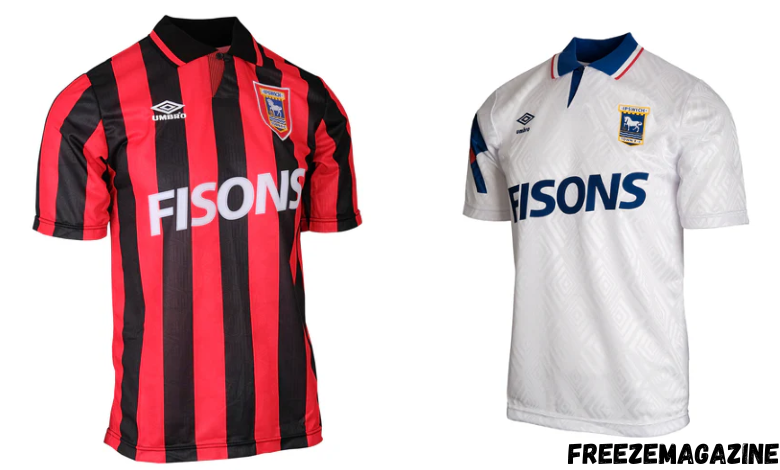
The 1992, 94 umbrella designs that marked Ipswich’s return to the top-tier football have the visual assurance that is typical of the best work of that period of the same manufacturer.
The home shirts of the time perfectly combine innovation with tradition and clearly show that they are still Ipswich, while also featuring design elements that make them typical of the early 1990s look. The away options of the time were a bit more experimental with the color choices reflecting the wider trend of more adventurous away kit designs.
The 1995, 96, and 1996, 97 shirts made during the Championship period remain of a good standard, although they have become associated with the less successful seasons. It is sometimes the case that the best designs come about when there is less pressure from the commercial side and therefore the design brief has more room for genuine creative exploration. A number of Ipswich kits from the mid-1990s belong to this group, being less known than the promotion and relegation season kits but often more attractive as design pieces.
For collectors and supporters seeking authentic Ipswich kits from this era, condition varies significantly depending on how the shirts were stored and whether they were worn regularly. The 1990s polyester fabrics age differently from the cotton-heavy materials of earlier decades, with color retention depending heavily on washing history and UV exposure.
Why Ipswich Shirt History Rewards Deeper Exploration
The collector who spends time researching Ipswich’s kit archive finds something that a narrow focus on the most famous clubs can miss. There are historical regional clubs that, for a moment of genuine significance, have rich and captivating design histories that are far more than their current profile would suggest. Ipswich’s archive includes changes through eras of different manufacturers, genuine achievement periods, and different design philosophies that mirror the longer history of how football shirts changed.
The emotional aspect of these shirts is connected to something real about the essence of football before its globalization. Ipswich Town winning the UEFA Cup in 1981 with a predominantly British player squad and a local figure as the manager reflects a version of football that is truly different from the current game. Shirts from that time era carry that distinction with them; they are the kind of thing that one sees and immediately thinks of a particular time and place, and this is basically what makes them worthy of being owned.







Post Comment