Understanding UV Printing: How It Works and Why It’s Revolutionizing Modern Printing Techniques
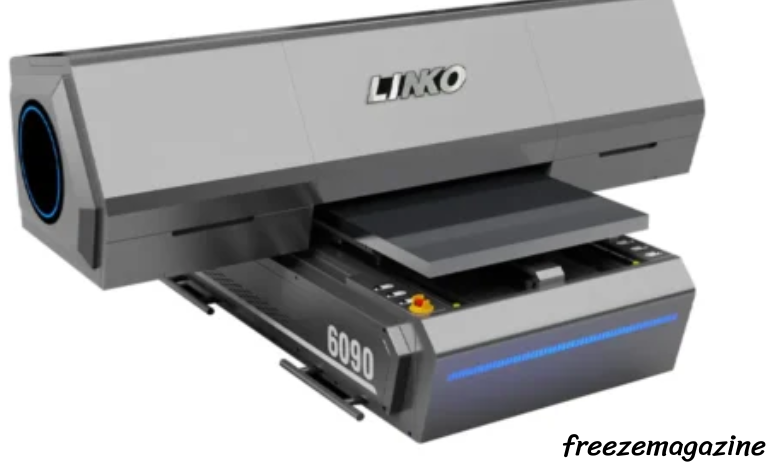
The use of UV printing has transformed the printing process on most surfaces. It employs special light and inks to ensure that the prints dry quickly. This is an appropriate approach for business and artists. The growing demand for print technology has prompted most production facilities to consider UV printers for sale as an investment in long-term, high-quality output. This shift has also expanded the capabilities of professional printing services, allowing them to produce high-quality prints on diverse surfaces.
In this paper, you will get to know about what UV printing is and how it works. It will include its advantages, application, and a few market facts. The idea is to make things simple and more innovative.
What is UV Printing?
The idea of UV printing can be understood by knowing its abbreviation. Digital printing, also known as UV printing (ultraviolet printing), is a process. It applies inks that dry under UV light, unlike traditional inks, which dry by air or heat. UV inks dry immediately with UV rays. This enables the process to be fast and clean.
The printers spray ink onto surfaces such as plastic, glass, metal, or wood. The UV light is used to dry the ink on the printing surface. The ink adheres to the surface very firmly, resulting in more durable prints that do not scratch or fade. UV printing began in the 1990s and became popular in the 2000s due to technological advances. Nowadays, it helps create signs, labels, and customized objects.
The key factor in the bright, clear print is the innovative ink. It contains photoinitiators, monomers, and oligomers for UV inks. These compounds respond to UV light and change their state to a solid. This prevents the ink from absorbing into the surface.
How Does UV Printing Work?
In the past, manufacturers used screen printing to print on clothing and various surfaces. Nowadays, with advances in technology, they can use a computer to create print designs.
· The first stage is to design the image using RIP software.
· The software transmits it to the UV printer.
· The printer has print heads that expel minute dots of UV ink.
· After that, the ink lands on the material, and immediately after, UV lamps or LEDs are turned on.
· The light initiates a chemical process, and the ink dries and hardens in seconds.
· The immediate drying will help in avoiding smudging the print.
Power Efficiency
LED lights are primarily used in UV printers and transmit less heat and consume less power than older mercury lamps. The printer can have multiple heads with various colors, including cyan, magenta, yellow, black, and white. White ink is used on dark or clear surfaces.
Appropriate for Different Materials
The material passes through the print heads, or the heads move over it. Flatbed printers work with thick items. Roll-to-roll ones use flexible materials, such as banners.
Minimum Time Required
The print is ready after drying, and the worker does not have to wait long. The use of the UV light makes the process very innovative and fast. It means a consumer can get their phone case printed in just one day.
Advantages of UV Printing
There are numerous advantages of UV printing. It dries fast and provides higher output. Workers can work on prints immediately without making a mess.
· The prints are durable, which means they are waterproof, sunproof, and resistant to abuse. This renders them very useful in the open environment. Colors remain bright as compared to other processes.
· The UV printing process works on many surfaces. No special coatings are required for the process. This makes the process cost-effective and saves time.
· The UV printing process is sustainable. The inks contain low volatile organic compounds (VOCs). This means less harm to the air, and LED lights use less power.
Applications of UV Printing
UV printing is required in many fields.
· It produces signs and posters in advertising.
· It is used as labels and boxes in packaging. Food and drinks brands, such as those with vibrant colors, and the printers can print on complex shapes.
· It personalizes pens, mugs, and keychains in promo items. Businesses use it for branding.
· The trend in aesthetics leads artists to print on canvas, wood, or acrylic using UV printing. Wall panels used for home decoration are designed uniquely.
· The electronics industry uses UV printing for circuit boards. Cars get custom dashboards through UV printing.
· Textured prints are more adorable and attractive. With UV printing, the manufacturer can create layers of ink to produce raised effects.
Conclusion
It is an innovative printing method, UV printing. It involves light to secure the inks onto the printing surfaces. This leaves powerful, vivid impressions on most objects. People use it for various purposes, from advertising signs to custom goods. The market trend is shifting towards UV printing due to its high production speed and high quality. UV is one of the best options if you want prints that last. It is a time-saving, sustainable, and environmentally friendly option. With improved technology, UV printing will perform better.





Post Comment