What Does Trampolining Teach Us About Human Biomechanics?
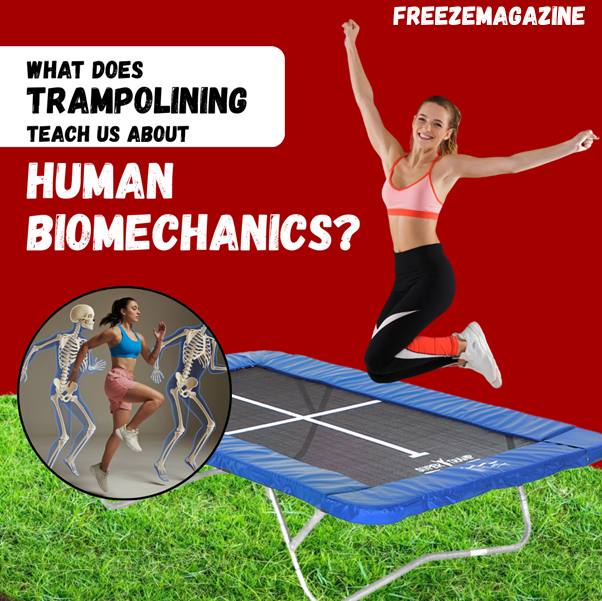
A trampoline may look like a simple source of fun, yet the body experiences something far more sophisticated with every bounce. What Trampolining Teaches Us About Human Biomechanics highlights how the human body naturally manages balance, force, coordination, and control during dynamic movement.
Each jump requires muscles to stabilise, joints to respond, and the nervous system to make rapid adjustments, all within seconds. This constant interaction between movement and control is what makes trampolining uniquely effective and surprisingly gentle on the body. For anyone considering buying a trampoline, understanding these mechanics offers a valuable perspective. It clarifies why bounce quality, structural stability, and safety design are not just product features but essential factors that directly influence comfort, performance, and physical benefits. In essence, trampolining is not only a recreation. It is a practical demonstration of how efficiently the body is built to move, adapt, and stay balanced.
Angular Momentum Conservation and “Spin Control”
- Manipulating Rotation: Once airborne, the body maintains a constant level of angular momentum. Rotation speed only changes when the jumper adjusts body positioning, which shifts how mass distributes around the centre of movement.
- Body Shape Matters: A compact tuck pulls body mass inward and increases spin speed. In contrast, extending the arms and legs spreads mass outward, which slows rotation and stabilises motion.
- Twisting Control: Twists develop through deliberate asymmetry. Subtle arm movements or slight hip shifts create controlled rotational changes, allowing the body to manage direction and balance while in the air.
A stable and the best garden trampoline with consistent rebound helps the body stay aligned, making movement feel smoother and easier to manage. Up next, it helps to understand how force and rebound shape every bounce.
Newton’s Laws: Force Production and Impulse
- Action–Reaction: Height on a rectangle trampoline follows a direct force exchange. The jumper drives force downward into the bed, and the surface immediately returns an equal upward force that propels the body into the air.
- Maximum Force Application: Rebound strength depends on how effectively the bed compresses under load. Deeper, well-controlled compression allows greater energy storage, while a stable, upright posture helps transfer force cleanly through the body without unnecessary strain.
- Acceleration and G Forces: Trampolining exposes the body to rapid acceleration changes during the takeoff and landing phases. These shifts highlight how efficiently the musculoskeletal system manages load, balance, and control during repeated vertical motion.
With height and force explained, the next step is to see where all that movement energy actually goes during each bounce.
Transfer of Kinetic Energy (Potential to Kinetic)
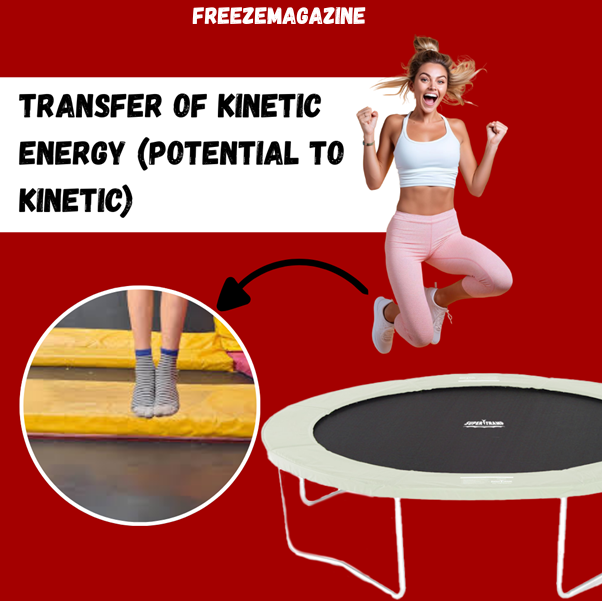
- Energy Cycling: During each landing, the body’s movement energy shifts into stored energy within the in ground trampoline system. At the lowest point of bed compression, this captured energy remains briefly under tension before returning to upward motion, which lifts the body into the next bounce.
- Energy Loss: Not all stored energy converts back into movement. A small portion naturally dissipates through material friction and air resistance, which is why rebound efficiency depends on trampoline design, tension balance, and component quality.
This constant energy flow also explains how the body prepares for impact and balance during repeated jumps.
Balance, Awareness, and Reflexes
- Body Position Control: Exercise trampoline continuously challenges the body’s internal balance system. With every bounce, muscles and joints send rapid signals to the brain, allowing it to monitor positioning, correct alignment, and maintain stability without conscious effort.
- Proprioceptive Response: This ongoing adjustment process sharpens proprioception, the body’s natural awareness of movement and spatial orientation. Repeated jumps encourage quicker corrections, smoother coordination, and more controlled landings.
- Visual Input: Clear visual focus plays a direct role in movement accuracy. Tracking the trampoline bed before contact enables small, last-moment posture changes that support steadier, more controlled rebounds.
These balance-driven responses also connect closely with how the body absorbs and redistributes landing forces.
Joint Safety and Musculoskeletal Adaptations
- Musculoskeletal Adaptations and Joint Safety: Trampolining places the body under repeated yet controlled loading patterns. Each landing introduces measured stress that encourages bones, muscles, and connective tissues to respond and strengthen over time.
- Bone Response: Consistent, low-impact force stimulates bone maintenance and structural resilience, particularly in weight-bearing regions that manage vertical movement.
- Joint-Friendly Intensity: The trampoline bed absorbs a large percentage of landing pressures, making it a wonderland of workouts in contrast to hard-surface sports. This cushioning effect reduces direct joint strain while still allowing active, rhythmic movement.
- Stabilising Muscles: Continuous balance correction keeps core, leg, and back muscles engaged, supporting posture and movement control.
These structural adaptations also influence how muscles coordinate during motion.
The Role of Core and Muscle Activation
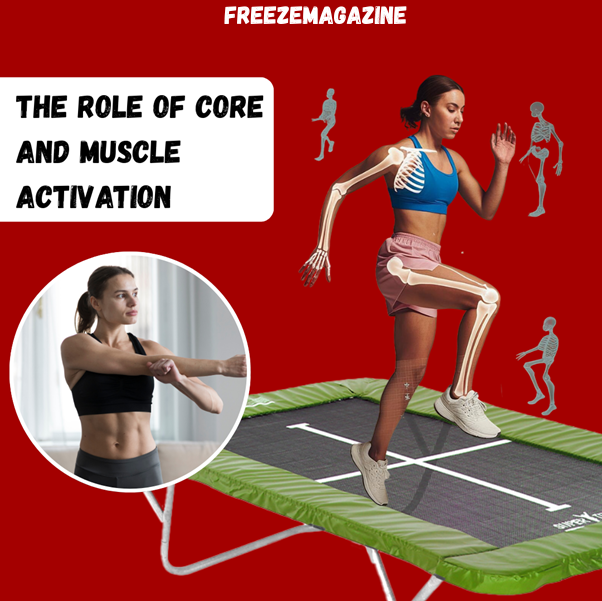
- Muscle Activation and Core Stability: Trampolining places the core at the centre of every movement. The body relies on deep stabilising muscles to maintain alignment, control posture, and manage balance during both takeoff and landing.
- Coordinated Muscle Response: Twisting, adjusting, and stabilising require multiple muscle groups to work together. Rather than isolating one area, the body activates the legs, trunk, and back in a connected, responsive pattern.
- Movement Differences: Unlike repetitive ground exercises, 10ft trampoline workout introduces constant micro adjustments. Muscles react dynamically instead of repeating fixed movement cycles.
These activation patterns also explain why trampolining supports practical, movement-based strength rather than isolated muscle effort.
Conclusion
Trampolining often gets labelled as simple recreation, yet the body treats it as a highly coordinated mechanical task. Each bounce engages balance control, force management, joint response, and muscle coordination in ways few everyday activities replicate. This is precisely where What Trampolining Teaches Us About Human Biomechanics becomes so relevant. The body thrives on controlled, rhythmic, and dynamic movement, and trampolining naturally delivers this combination without the harsh loading patterns seen in many ground-based exercises.
For prospective buyers, this understanding shifts the conversation from novelty to long-term value. A well-designed trampoline does more than support movement. It shapes how safely and efficiently the body absorbs force, maintains stability, and sustains repeated motion. Structural integrity, consistent rebound, and safety-focused engineering directly influence comfort, control, and durability. In practical terms, thoughtful trampoline design protects the user while enhancing the overall movement experience.






Post Comment