Understanding Tensile Strength in Textile: A Comprehensive Guide to Testing
When you hold a piece of fabric, you rarely think about the immense forces it must withstand in its lifetime. From the simple act of putting on a pair of jeans to the critical demands of a parachute canopy during deployment, a textile’s ability to resist being pulled apart is fundamental to its performance and safety. This essential property is known as tensile strength in textile materials.
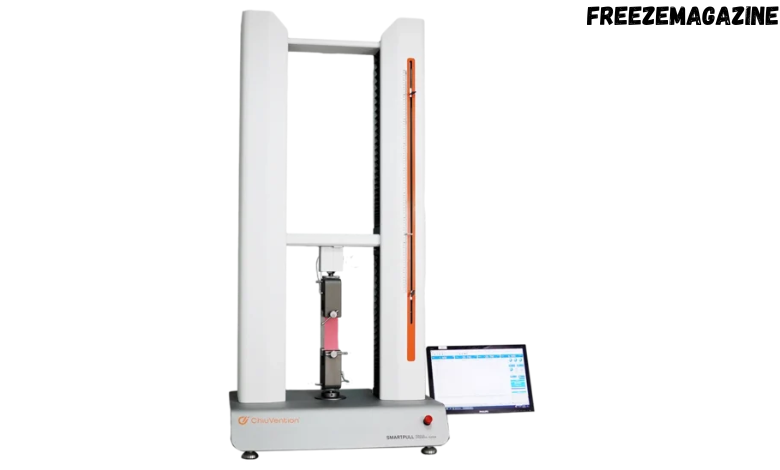
But how is this strength measured? How do manufacturers ensure that a bolt of fabric will meet the required standards? In this guide, we will explore the importance of tensile strength, the science behind testing it, and the technology that makes accurate measurement possible, such as advanced equipment like the SmartPull Double Column Tensile Strength Tester.
What is Tensile Strength in Textile?
In simple terms, tensile strength is the maximum amount of tensile (stretching or pulling) stress that a material can withstand before it fails, or breaks. Imagine gripping a piece of fabric at both ends and pulling it in opposite directions until it tears. The force required to break it is a measure of its tensile strength.
For textiles, this property is crucial for several reasons:
- Durability: It indicates how well a fabric will hold up under stress during use, such as in workwear, upholstery, or automotive airbags.
- Quality Control: Manufacturers use tensile tests to ensure consistency across production batches, guaranteeing that every roll of fabric meets the specified strength requirements.
- Material Development: Researchers and developers use tensile data to create new fabrics with enhanced properties, like higher strength-to-weight ratios for technical textiles.
The Principle of Tensile Testing
The fundamental principle of tensile testing is straightforward: a standardized sample of fabric is clamped between two jaws. One jaw remains stationary while the other moves at a constant speed, pulling the fabric until it breaks. Throughout the process, a precision instrument measures two key things:
- The Force Applied: How much pulling force is being exerted on the sample.
- The Elongation: How much the fabric stretches before it breaks.
This data is then plotted on a graph, creating a force-elongation curve. From this curve, technicians can determine critical values like the tensile strength (the highest force point on the curve) and the elongation at break (the amount the fabric stretched at the moment of failure).
What Makes a Dual Column Tensile Strength Tester the Ideal Choice?
While there are different types of tensile testers, the dual column configuration is often the preferred choice for rigorous and reliable textile analysis. A dual column tensile strength tester, like the SmartPull model, features a robust two-column frame that provides exceptional stability and alignment. This design is particularly beneficial for:
- High Load Capacity: The dual-column structure allows the machine to handle higher forces without flexing or bending, making it suitable for testing strong, dense, or industrial textiles.
- Superior Accuracy and Stability: The rigid frame ensures that the pulling force is applied perfectly axially, preventing side-loads on the sample that could skew results. This stability is critical for obtaining accurate and repeatable data.
- Larger Test Space: The design typically offers a wider testing area, accommodating bulkier materials, specialized fixtures, or environmental chambers if needed.
For instance, the SmartPull Double Column Tensile Strength Tester boasts a testing capacity of up to 1000 kg and is driven by a precise AC servo motor and ball screws, ensuring a consistently stable pulling force for dependable outcomes.
Meeting International Testing Standards
To ensure that test results are meaningful and comparable globally, tensile testing must adhere to strict international standards. A professional-grade tester is designed to comply with a wide range of these protocols. A versatile machine will accommodate standards such as:
- ISO 9073-3: For determining the tensile strength and elongation of nonwovens.
- ISO 3377-2: For measuring the tear strength of leather.
The ability to switch between these standards, often via pre-programmed software, makes a tester invaluable for labs serving a global market or diverse industries.
The Anatomy of a High-Quality Tensile Tester
A modern tensile strength testing machine is more than just a frame with clamps.
- Dual Column Frame & Crosshead: Provides the rock-solid foundation and applies the pulling force.
- Load Cell: This is the heart of the machine’s accuracy. It’s a sensor that measures the force applied to the sample. High-quality testers allow for interchangeable load cells (e.g., 5kN, 10kN) to match the strength of different materials.
- Fixtures and Grips: These hold the specimen securely without damaging it or allowing slippage. Options range from manual flat-faced clamps for woven fabrics to pneumatic grips for delicate materials and specialized fixtures for tear tests or yarns.
- It controls the test speed, records data in real-time, draws the force-elongation curve, and automatically calculates results like tensile strength, yield point, and modulus. Advanced software, like the versions mentioned for the SmartPull, can even perform multi-step tests and generate detailed reports.
The Testing Process: A Step-by-Step Overview
Performing a tensile test involves a meticulous procedure to ensure accuracy:
- Specimen Preparation: Samples are cut to precise dimensions as dictated by the relevant standard (e.g., a 50mm wide strip).
- The load cell may be calibrated using certified weights to verify its accuracy.
- Mounting the Specimen: The specimen is carefully centered and clamped in the upper and lower jaws, ensuring it is held firmly without any pretension.
- Running the Test: The test is initiated. The crosshead moves upward at a constant speed, applying tension until the specimen breaks. The software displays the rising force and elongation in real-time.
- Data Analysis: After the break, the machine automatically stops and returns to its starting position. The software analyzes the data, displaying the key results like the maximum force (tensile strength) and the elongation at break. This data can be saved, exported, and compiled into a professional test report.
Frequently Asked Questions
Q: What is the difference between a single column and a double column tester?
A: A single column tester is generally more compact and cost-effective, ideal for lower-force applications like testing thin films, light fabrics, or yarns. A double column tester offers greater stability, higher load capacity, and a larger test area, making it the better choice for testing strong, heavy-duty textiles, composites, and for performing compression or bend tests.
Q: What other tests can a tensile tester perform?
A: With the right fixtures and software, a dual-column universal testing machine is incredibly versatile. Besides tensile tests, it can perform compression tests (crushing force), flexural or bend tests (stiffness), peel tests (for laminates), tear tests, and shear tests.
Conclusion
Understanding and accurately measuring tensile strength in textile is not just a laboratory exercise; it’s a critical component of product development, quality assurance, and safety compliance. Whether you are developing a new performance fabric or ensuring the quality of a bulk order, the right testing equipment provides the reliable data you need. Investing in a robust and precise instrument, like a dual-column tensile strength tester, ensures that your textiles can stand up to the demands of their real-world applications, providing confidence from the production line to the end-user.
For more detailed information on high-quality textile testing solutions, you can explore the specifications and features of advanced equipment like the SmartPull Double Column Tensile Strength Tester. Reach directly to Sales Contact:
- WhatsApp: +86 180 2511 4082
- Tel: +86 769 2329 4842
- Fax: +86 769 2329 4860
- Email: sales@chiuvention.com








Post Comment