How Poor Conflict Management Affects Team Productivity?
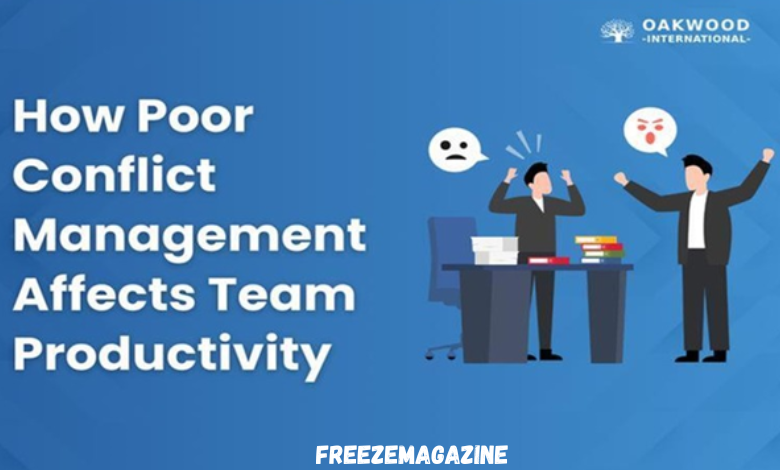
Have you ever witnessed a team disintegrate due to unresolved conflict rather than a lack of talent? Professionals pursuing CIPD Level 7 are aware that hiring and training are only a small part of people management. It is fundamentally about how teams perform under duress.
Ineffective Conflict Management silently damages motivation, undermines trust, and reduces output. Furthermore, until actual harm is done, the majority of leaders are unaware of it. In this blog, we will explore how poor conflict management silently damages team productivity, employee wellbeing, and overall organisational performance.
Table of Contents
- What Does Poor Conflict Management Actually Look Like?
- How Unresolved Conflict Quietly Kills Team Productivity?
- The Emotional Toll on Employees and Team Culture
- Communication Breakdown: The Hidden Productivity Killer
- How Managers Make Conflict Worse Without Realising It?
- Practical Ways to Manage Conflict Before It Escalates
- Conclusion
What Does Poor Conflict Management Actually Look Like?
When people think of conflict at work, they usually think of people yelling at each other. But that’s not how it usually looks. It looks like silence more often. Emails that are cold. People are not talking to each other in meetings. Comments that are passive-aggressive during a project review.
Conflict at work is often hard to see. That’s what makes it so dangerous. If you don’t deal with small tensions, they can turn into deep-seated anger. And anger doesn’t stay quiet for long.
How Unresolved Conflict Quietly Kills Team Productivity?
Here is something worth thinking about. It’s never just the problem of the two team members who are at odds. Everyone on the team feels it.
When people work around each other instead of with each other, the team’s productivity goes down. People miss deadlines. The quality goes down. People stop sharing ideas because they are afraid of being judged or getting pushback.
Research has consistently demonstrated that employees exhibit diminished engagement in environments characterised by significant conflict. When people don’t feel safe or supported, they only do what they need to do to get by. For any business, that’s a big loss.
The Emotional Toll on Employees and Team Culture
There is conflict outside of work. It goes home with people. It has an effect on sleep, concentration, and mental health. This leads to employee burnout, more staff turnover, and more people missing work overtime.
Consider how much that costs a company. It costs a lot to hire and train a new employee. But the real cost of having workers who aren’t engaged is even higher. Wellbeing at work is not a luxury. It’s something that businesses need. People do better work when they feel respected and heard. It really is that easy.
Communication Breakdown: The Hidden Productivity Killer
Bad communication and bad conflict management go hand in hand. People stop talking openly when there is conflict. They begin to guess. More and more misunderstandings happen.
A team must be able to communicate with one another in order to function effectively. Without it, even the most productive team will struggle to complete tasks. Teams who are unable to reach a consensus frequently squander time in pointless meetings, repeat tasks, or correct errors that could have been prevented. That is expensive and time-consuming.
How Managers Make Conflict Worse Without Realising It?
Here is the truth that many organisations are reluctant to acknowledge. Frequently, managers contribute to the issue.
It may seem like preserving the peace to take sides, steer clear of contentious discussions, or ignore conflict. However, it has the opposite effect. It lets the team know that disagreements won’t be handled fairly.
Here, leadership abilities are crucial. A manager will unintentionally let conflict grow if they lack confidence in their ability to handle challenging situations. Tasks and deadlines are only one aspect of people management. It involves establishing a culture in which problems are resolved quickly and equitably.
Practical Ways to Manage Conflict Before It Escalates
The good news? You can deal with conflict. It can even make a team stronger if you handle it well. This is how to get ahead of it:
- Make People Feel Safe Psychologically: They should be able to voice their concerns without fear. Regular one-on-ones and open-door policies are helpful in this case.
- Act Quickly: Don’t let small problems get out of hand. Deal with stress as soon as you see it.
- Focus on the Problem, Not the Person: This keeps conversations going and stops people from feeling like they’re being attacked.
- Put Money into Leadership Development: Managers who know how to deal with people and HR strategy are much better at dealing with team dynamics.
- Use Mediation When You Need to: An internal or external mediator can sometimes help both sides come to a fair solution.
These steps aren’t hard to follow. But they need to be consistent and dedicated.
Conclusion
One of the biggest threats to team performance that people don’t think about enough is unresolved conflict. It hurts trust, involvement, and productivity. Companies that do well are the ones that care about managing people and train their leaders to handle stress with skill and confidence.
Oakwood International has professional development paths that help HR and management professionals lead with clarity and purpose if you want to improve that skill. You don’t just get strong teams by chance. Leaders who know how to have tough talks build them.






Post Comment