Why BIM-Ready Shop Drawings Are Becoming the Industry Standard
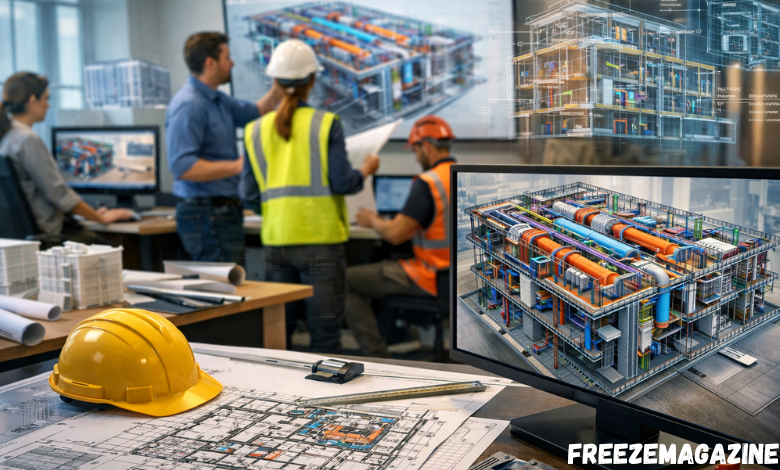
Introduction: Are Traditional Shop Drawings Still Enough in a BIM-Driven World?
A decade ago, traditional CAD shop drawings were more than sufficient to get projects approved, fabricated, and installed. Fast forward to today, and the AEC (Architecture, Engineering, and Construction) industry in the USA and UK is undergoing a major digital shift. Building Information Modeling (BIM) is no longer optional; it’s becoming mandatory for public and private projects alike.
This shift has triggered a major change in how shop drawing services are delivered. Increasingly, contractors, architects, and developers are demanding BIM-ready shop drawings with detailed, data-rich drawings that seamlessly integrate with BIM workflows.
So, why exactly are BIM-ready shop drawings becoming the industry standard? What challenges are driving this transition, and what opportunities does it create for businesses and professionals? Let’s break it down.
What Are BIM-Ready Shop Drawings, and How Are They Different?
Before diving deeper, it’s important to clarify what BIM-ready shop drawings actually are.
How Do BIM-Ready Shop Drawings Differ from Traditional CAD Shop Drawings?
Traditional CAD shop drawings are typically 2D or basic 3D representations used for fabrication and installation. BIM-ready shop drawings, on the other hand, are created with BIM compatibility in mind.
They:
- Align with BIM models (LOD 300–LOD 400 and above)
- Contain parametric and metadata-rich elements
- Integrate geometry, materials, quantities, and specifications
- Support clash detection and coordination
In simple terms, BIM-ready drawings don’t just show what to build, they help teams understand how, when, and where to build it within a coordinated digital environment.
This evolution is especially visible in millwork shop drawings services, where precision, material detailing, and coordination with architectural and MEP elements are critical.
Why Is BIM Adoption Accelerating in the USA and UK?
What Market Forces Are Driving BIM Standardization?
BIM adoption isn’t happening in isolation. Several macro-level factors are accelerating this transition:
- Government mandates:
The UK government has required BIM Level 2 for publicly funded projects since 2016, and BIM frameworks continue to evolve. In the USA, agencies like the GSA and DOT increasingly specify BIM deliverables. - Complex building designs:
Modern buildings involve intricate systems, customized interiors, and tight tolerances making traditional 2D workflows risky. - Global collaboration:
With design and drafting teams distributed worldwide, BIM provides a shared source of truth.
These trends are pushing shop drawing services to evolve beyond static CAD files.
Why Are BIM-Ready Shop Drawings Reducing Costly Errors?
How Do BIM Shop Drawings Improve Accuracy and Coordination?
One of the strongest arguments for bim shop drawings is error reduction.
Industry data shows that rework accounts for nearly 5–15% of total construction costs, largely due to coordination issues and design conflicts. BIM-ready drawings address this by:
- Enabling clash detection before fabrication
- Coordinating millwork, structure, and MEP systems
- Reducing RFIs during construction
- Ensuring fabrication aligns precisely with design intent
For example, millwork elements such as cabinetry, wall panels, and custom furniture often clash with services like electrical conduits or HVAC ducts. BIM-ready millwork shop drawings services help resolve these conflicts digitally before materials are cut or installed.
How Are Fabricators and Contractors Benefiting from BIM-Ready Drawings?
Why Are Fabrication Teams Asking for BIM Compatibility?
Fabricators and contractors are among the biggest advocates of BIM-ready shop drawings.
Here’s why:
- More accurate quantities:
BIM-based drawings allow precise take-offs, reducing material waste. - Faster approvals:
Coordinated drawings lead to fewer revision cycles. - Improved installation sequencing:
BIM models help teams plan installation in the correct order. - Prefabrication readiness:
BIM-ready drawings support off-site fabrication, which is growing rapidly in the USA and UK.
Why Are Architects and Designers Pushing for BIM Shop Drawings?
How Do BIM-Ready Drawings Protect Design Intent?
Architects invest significant time developing a design vision. However, that vision can be compromised if shop drawings lack clarity or coordination.
BIM-ready cad shop drawings help architects by:
- Maintaining alignment with architectural BIM models
- Preserving material finishes, profiles, and dimensions
- Supporting better visualization during reviews
- Reducing design liability caused by misinterpretation
For interior-heavy projects such as hotels, offices, and luxury residences, BIM-ready millwork drawings ensure that what gets built matches what was designed.
What Role Does Data Play in BIM-Ready Shop Drawings?
Why Is Embedded Information Becoming as Important as Geometry?
One major difference between traditional and BIM-ready drawings is data richness.
Modern BIM-ready shop drawings can include:
- Material specifications
- Fire ratings
- Sustainability data
- Manufacturer information
- Maintenance and lifecycle data
This data supports not only construction but also facility management. In fact, studies suggest that up to 80% of a building’s lifecycle cost occurs after construction, making BIM data invaluable long-term.
This is why tech decision-makers increasingly view BIM-ready shop drawing services as an investment rather than a cost.
What Challenges Are Firms Facing When Transitioning to BIM-Ready Shop Drawings?
Is the Shift to BIM Without Its Pain Points?
Despite the benefits, the transition isn’t without challenges.
Common obstacles include:
- Skill gaps in BIM software and workflows
- Higher upfront drafting costs
- Resistance to change from traditional CAD teams
- Coordination complexity across multiple stakeholders
However, these challenges are temporary. As BIM tools mature and global drafting expertise becomes more accessible, the long-term efficiency gains far outweigh the initial learning curve.
How Is the Global CAD Drafting Industry Adapting?
Why Are Outsourced BIM Shop Drawing Services Growing?
To manage cost and skill challenges, many firms in the USA and UK are partnering with specialized CAD and BIM service providers.
Key reasons include:
- Access to experienced BIM technicians
- Faster turnaround times
- Scalability for large projects
- Cost-effective production of BIM-ready drawings
This trend is particularly strong in millwork shop drawings services, where specialized knowledge of materials, joinery, and fabrication standards is essential.
Why Are BIM-Ready Shop Drawings Critical for Future-Proofing Projects?
How Do They Support Sustainability and Smart Buildings?
Sustainability and digital construction are closely linked.
BIM-ready shop drawings contribute by:
- Supporting material optimization and waste reduction
- Enabling energy analysis and performance simulations
- Aligning with green building certifications
- Preparing assets for digital twins and smart building systems
As smart buildings and IoT integration grow, BIM-ready documentation will become indispensable.
What Opportunities Do BIM-Ready Shop Drawings Create for Businesses?
How Can Companies Gain a Competitive Advantage?
Businesses that adopt BIM-ready shop drawing services early are seeing clear advantages:
- Higher win rates on BIM-mandated projects
- Stronger collaboration with architects and contractors
- Reduced project risk and liability
- Improved client trust and long-term partnerships
In competitive markets like the USA and UK, BIM capability is quickly becoming a differentiator rather than a bonus.
Conclusion:
The evidence is clear: BIM-ready shop drawings are no longer a niche requirement; they are fast becoming the industry standard.
Driven by government mandates, complex designs, cost pressures, and digital transformation, BIM-ready bim shop drawings, cad shop drawings, and millwork shop drawings services are reshaping how projects are planned, fabricated, and delivered.
For business owners, architects, engineers, and decision-makers, the question is no longer if BIM-ready shop drawings are necessary but how quickly they can be integrated into existing workflows.
As the industry continues to evolve, partnering with experienced CAD and BIM specialists such as leading UK-based CAD design companies can help organizations stay competitive, compliant, and future-ready in an increasingly BIM-driven world.
FAQs
1: What are BIM-ready shop drawings in construction?
Unlike traditional CAD shop drawings, they include accurate geometry, material data, and specifications that integrate seamlessly with BIM models used in modern construction projects across the USA, UK, and globally.
2: Why are BIM shop drawings becoming mandatory in the USA and UK?
BIM shop drawings are becoming mandatory due to government BIM mandates, complex building designs, and the need to reduce costly construction errors. In the UK, BIM Level 2 is required for public projects, while in the USA, BIM adoption is rapidly increasing across federal and private developments.
3: How do BIM-ready shop drawings reduce construction errors?
BIM-ready shop drawings help reduce construction errors by enabling clash detection, precise coordination, and accurate material take-offs before fabrication. This minimizes rework, reduces RFIs, and ensures smooth collaboration between architects, engineers, and contractors.
4: What is the difference between CAD shop drawings and BIM shop drawings?
CAD shop drawings are typically 2D or basic 3D representations used mainly for fabrication. BIM shop drawings, however, are data-rich, parametric, and coordinated with BIM models, making them ideal for modern construction projects that require higher accuracy and lifecycle data.
5: Why are millwork shop drawing services moving toward BIM?
Millwork shop drawings services are shifting toward BIM because millwork elements require high precision and coordination with architectural and MEP systems. BIM-ready millwork drawings help avoid clashes, ensure design accuracy, and support prefabrication for projects in the USA and UK.
6: Are BIM-ready shop drawing services cost-effective for small and mid-size projects?
Yes, BIM-ready shop drawing services are cost-effective even for small and mid-size projects because they reduce material waste, rework, and project delays. Although initial costs may be slightly higher, the long-term savings and efficiency gains outweigh the investment.
7: Who should use BIM-ready shop drawing services?
BIM-ready shop drawing services are ideal for architects, engineers, contractors, developers, and fabrication teams working on commercial, residential, and infrastructure projects especially in BIM-driven markets like the USA and UK.







Post Comment