Why More UK Watch Collectors Are Turning to Watch Winders in 2026
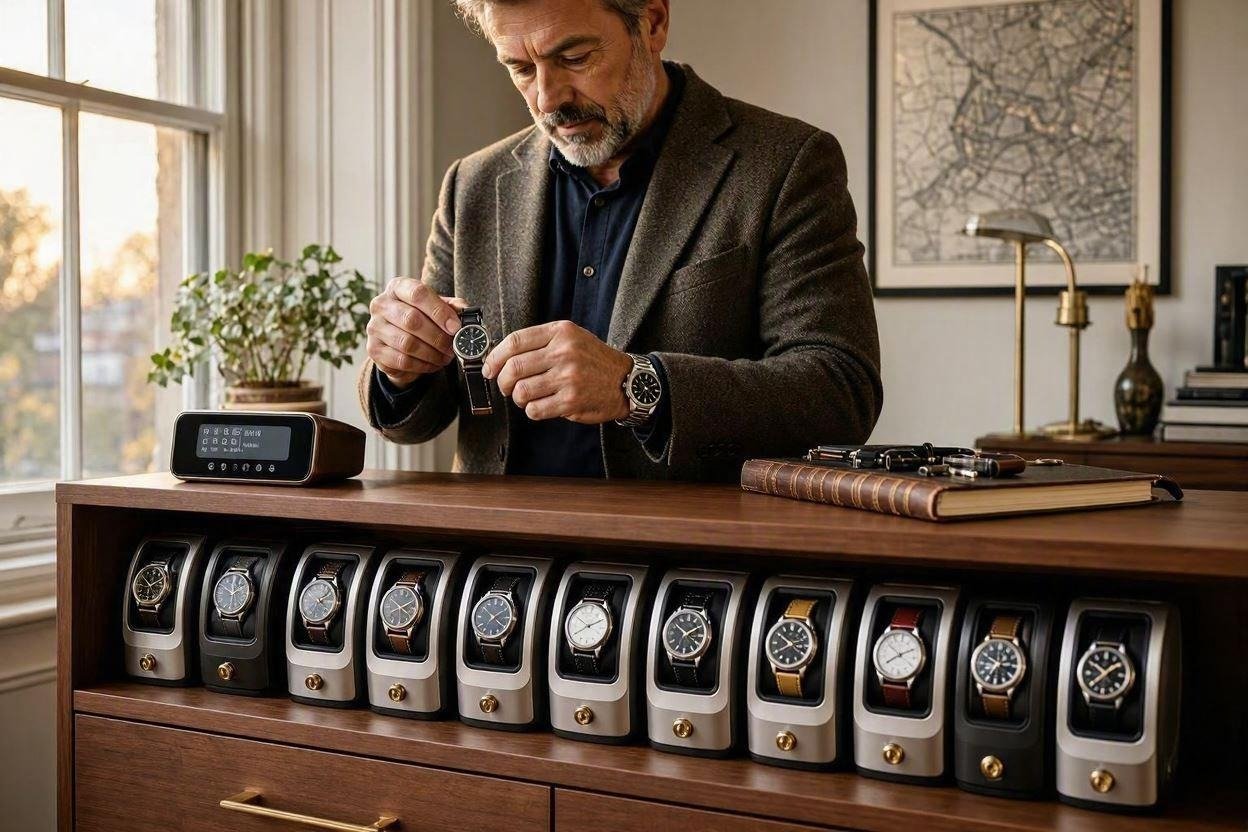
Automatic watch collecting has quietly become one of the fastest-growing hobbies in the UK. Scroll through any watch forum or Instagram collector page and you’ll spot the same accessory sitting in the background of nearly every photo: a watch winder. What used to be a niche purchase for serious collectors has turned into a mainstream must-have, and the reasons behind that shift say a lot about how people are buying, wearing, and thinking about watches right now.
This isn’t just a passing trend. It reflects a genuine change in how UK buyers are approaching automatic watches, from first-time owners with a single Tissot to seasoned collectors juggling a rotation of six or seven pieces.
The Automatic Watch Boom Isn’t Slowing Down
Automatic watches never really went away, but the last few years have pushed them back into the spotlight. Younger buyers who grew up with smartwatches are now gravitating toward mechanical pieces precisely because they don’t need charging, syncing, or an app. There’s something appealing about a watch that runs purely on motion and engineering.
At the same time, pre-owned and vintage watch buying has exploded. Sites and marketplaces dedicated to secondhand luxury watches have made it far easier to pick up a well-maintained Omega, Rolex, or Seiko without paying boutique prices. More automatic watches in circulation naturally means more people running into the same problem: what do you do with a self-winding watch when you’re not wearing it?
That’s exactly where the winder conversation starts.
Why an Automatic Watch Stops the Moment You Take It Off
An automatic movement relies on the natural motion of your wrist to keep its mainspring wound. Take the watch off, and that motion stops. Most automatics will run somewhere between 38 and 70 hours on a full wind, depending on the movement, before they wind down completely.
Once a watch stops, you’re not just resetting the time. On watches with a date, day, or moonphase complication, you may need to work through several settings just to get everything back in sync. For watches with anti-magnetic properties or delicate complications, repeated manual winding and resetting also puts more wear on the crown and stem over time than most owners realise.
This is the exact problem a watch winder solves. Instead of the movement stopping when the watch is stored, a winder gently rotates it to mimic the motion of being worn, keeping the mainspring wound and the watch ready to go the moment you pick it up.
What’s Driving the Winder Trend Specifically in 2026
A few clear patterns are behind the current surge in interest.
Multi-watch ownership is now the norm, not the exception. Where a collector might once have owned one or two automatic pieces, it’s increasingly common to see rotations of four, five, or more. Managing that many watches manually simply isn’t practical, so winders have moved from “nice to have” to genuinely necessary.
Gifting has become a major driver. Watch winders have turned into a popular gift for anniversaries, milestone birthdays, and promotions, particularly for someone who’s just been given or has just bought their first serious automatic watch. A winder signals that the recipient is expected to take proper care of the piece.
Home displays and “watch corners” are having a moment. Interior styling content has embraced the idea of a dedicated watch box or winder display as a piece of furniture in its own right, not just storage. A quality winder looks the part on a shelf or dresser, which has pulled in buyers who are as interested in presentation as function.
People are protecting their investment. With watch prices climbing steadily, owners are more conscious than ever of preserving movement health and resale value. A well-maintained automatic with documented, consistent winding history holds its value better than one that’s been left to start and stop repeatedly.
Choosing the Right Watch Winder
Not every winder suits every watch, and this is where a lot of first-time buyers get it wrong. A few things genuinely matter.
Rotation direction (TPD and direction settings). Different movements need different turns per day and rotation directions — clockwise, counter-clockwise, or bi-directional. Using the wrong setting won’t damage the watch, but it won’t wind it efficiently either, so it’s worth checking your specific movement’s requirements before running a winder continuously.
Build quality and motor noise. A cheap winder with a noisy or jerky motor can do more harm than good over months of continuous use. Look for a smooth, quiet rotation, sturdy watch cushions, and a case that actually protects the watch from dust and light.
Single vs multi-watch units. If you own one automatic, a single winder does the job. Collectors with a rotating group of watches tend to move quickly toward multi-slot units, since each watch can be set to its own program independently.
If you’re weighing up your options, it’s worth taking a look at the range of watch winders built specifically around these differences in movement type and TPD requirements, rather than a generic one-size-fits-all approach.
Setting Up a Watch Winder Correctly
Buying the right winder is only half the job. Setup matters just as much, and it’s the step most new owners skip past too quickly.
Getting the direction and TPD wrong is the most common mistake, followed closely by overwinding a watch that only needs a few hours a day of rotation rather than round-the-clock movement. Positioning also matters: a winder placed in direct sunlight or somewhere with heavy vibration (like next to a washing machine) isn’t doing the watch any favours either.
For anyone setting up a winder for the first time, a guide to time on your side walks through the correct settings step by step, which saves a lot of trial and error compared to guessing based on the manual alone.
Is a Watch Winder Actually Worth It?
For anyone with a single automatic they wear most days, a winder is genuinely optional. Manually resetting the time and date every couple of days isn’t a huge burden.
Where a winder earns its keep is with watches that have complicated date mechanisms, perpetual calendars, or moonphase displays that are genuinely tedious to reset. It’s also worth it for anyone who travels frequently and doesn’t want to come home to a stopped watch, and for collectors rotating multiple pieces who want each one ready to wear without a five-minute setup routine first.
This lines up with wider industry data too. Recent findings from Deloitte’s Swiss Watch Industry Study show that pre-owned watches are gaining real momentum, with roughly four in ten millennial and Gen Z respondents saying they’re likely to buy a pre-owned piece over the coming year. More people buying automatics secondhand naturally means more people needing to look after them properly, which is exactly why everyday watch care accessories are getting so much more attention right now.
Final Thoughts
The rise in watch winder demand isn’t a marketing gimmick. It’s a natural response to more people owning automatic watches, building rotations, and taking maintenance seriously earlier in their collecting journey than previous generations did. Whether you’ve just bought your first automatic or you’re managing a growing collection, a well-chosen winder set up correctly does more than keep the time accurate. It protects the movement, preserves value, and takes one small chore off your plate.
If you’re exploring your options, you can find out more about the full range of watch care accessories, tools, and storage solutions built for exactly this kind of everyday collecting.
FAQs
How long can an automatic watch run without being worn or wound? Most automatic movements run between 38 and 70 hours fully wound, though this varies by brand and calibre. Once that reserve runs out, the watch stops until it’s manually wound or worn again.
Do all automatic watches need the same winder settings? No. Different movements require different turns per day and rotation directions. Running a winder on the wrong setting won’t damage the watch, but it may not wind it effectively.
Can a watch winder damage my watch? A well-made winder used correctly won’t harm your watch. Problems usually come from cheap, jerky motors or using the wrong TPD and direction settings for an extended period.
Is it better to wind a watch by hand or use a winder? Both work. Hand-winding is fine for a single daily-worn watch, while a winder is more practical for complicated movements, frequent travellers, or anyone managing several automatics at once.
Should I leave my watch winder running all the time? Not necessarily. Many owners run their winder for a few hours a day or every other day rather than continuously, which is usually enough to keep the mainspring wound without unnecessary extra wear.










Post Comment