Powder Metal vs Machined Parts: The Complete ISO 9001 Quality Comparison for Engineers
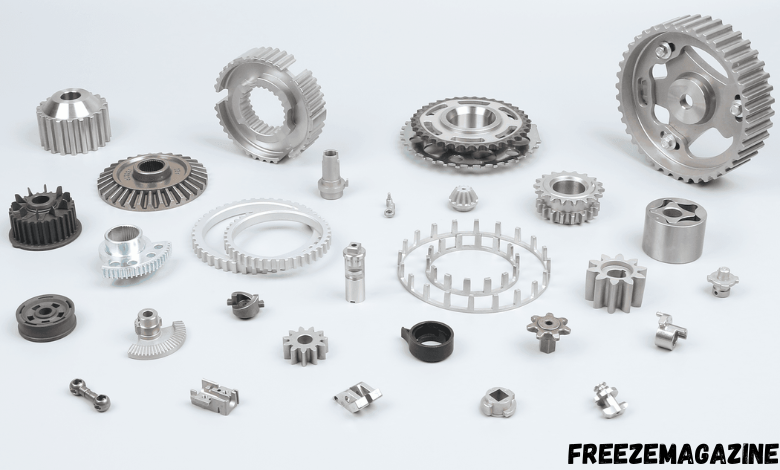
Manufacturing engineers face mounting pressure to deliver consistent, reliable components while managing costs and production timelines. The choice between powder metallurgy and traditional machining often determines not just immediate production outcomes, but long-term operational reliability across entire product lines. Both manufacturing approaches can achieve high-quality results, yet they differ fundamentally in how they control dimensional accuracy, material consistency, and process repeatability.
This comparison becomes particularly critical when ISO 9001 quality requirements enter the equation. Quality management systems demand documented processes, measurable outcomes, and consistent performance across production runs. Understanding how powder metal and machined parts align with these requirements helps engineers make informed decisions that support both immediate production needs and broader quality objectives.
Manufacturing Process Control and Quality Foundations
Powder metallurgy creates parts through controlled compression and sintering of metal powders, while traditional machining removes material from solid stock to achieve final dimensions. Each approach establishes quality control at different stages of production, with distinct implications for ISO 9001 compliance and process documentation.
In powder metallurgy, quality control begins with powder characteristics and extends through pressing, sintering, and finishing operations. Powder metal parts iso 9001 certification requires careful monitoring of powder composition, particle size distribution, and sintering atmosphere control. The process relies on statistical control of multiple variables that interact during forming and heat treatment.
Machining establishes quality through tool control, workholding precision, and cutting parameter management. Quality control focuses on dimensional verification, surface finish measurement, and tool wear monitoring. The subtractive nature of machining allows for real-time adjustment and correction during production, providing immediate feedback on dimensional accuracy.
Process Documentation Requirements
ISO 9001 quality systems require comprehensive process documentation that demonstrates control over manufacturing variables. Powder metallurgy documentation must address powder handling procedures, pressing force calibration, sintering temperature profiles, and atmosphere control systems. These processes involve multiple interdependent variables that require careful correlation and control.
Machining documentation centers on cutting parameters, tool specifications, workholding methods, and inspection procedures. The direct relationship between machining parameters and final dimensions simplifies documentation requirements and allows for clearer cause-and-effect relationships in quality records.
Statistical Process Control Implementation
Statistical control methods differ significantly between these manufacturing approaches. Powder metallurgy requires control charts that account for batch-to-batch powder variation, pressing consistency, and sintering uniformity. The inherent variation in powder characteristics means that process control must accommodate broader tolerance bands while maintaining final part specifications.
Machined parts benefit from more direct statistical control relationships. Dimensional variation correlates directly with tool wear, machine condition, and setup accuracy. This direct correlation allows for tighter statistical control and more predictable process capability indices.
Dimensional Consistency and Tolerance Achievement
The fundamental difference in how these processes create final dimensions directly impacts quality outcomes and ISO 9001 compliance. Powder metallurgy achieves dimensions through controlled shrinkage during sintering, while machining creates dimensions through material removal with direct tool contact.
Powder metal parts experience dimensional changes during sintering that must be predicted and controlled through tooling design and process parameters. This indirect dimensional control requires extensive process development and validation to achieve consistent results. Once established, however, the process can deliver high repeatability across large production volumes.
Machining provides direct dimensional control through tool position and cutting depth. This direct relationship allows for immediate correction and adjustment during production. Tolerance achievement depends on machine capability, tooling rigidity, and workholding consistency rather than material transformation processes.
Tolerance Capability Comparison
Powder metallurgy typically achieves tolerances in the range of plus or minus several thousandths of an inch in the as-sintered condition. Tighter tolerances require secondary operations such as sizing, machining, or grinding. The process excels in maintaining consistent tolerances across high-volume production runs once process parameters are established and validated.
Conventional machining can achieve much tighter tolerances, often within tenths of thousandths of an inch, depending on machine capability and part geometry. However, maintaining these tight tolerances requires ongoing tool management, machine maintenance, and process monitoring throughout production runs.
Geometric Complexity and Quality Control
Complex geometries present different quality challenges for each process. Powder metallurgy can form intricate internal features, undercuts, and multiple levels in a single pressing operation. Quality control must verify these features through methods that may not require complete machining access, such as go/no-go gauging or coordinate measurement.
Machining complex geometries requires multiple setups, specialized tooling, and careful workholding strategies. Each setup introduces potential variation sources that must be controlled and documented. However, the ability to measure features directly during and after machining provides immediate quality feedback.
Material Properties and Consistency Standards
Material consistency affects not just individual part performance but entire assembly reliability and long-term service life. ISO 9001 quality systems require demonstrated control over material properties that affect final product performance and customer satisfaction.
Powder metallurgy creates material properties through controlled porosity, alloy distribution, and sintering conditions. The resulting microstructure differs from wrought materials, with porosity levels and pore distribution affecting mechanical properties. These characteristics remain consistent within established process windows but require different testing and validation approaches compared to traditional materials.
Machined parts begin with certified mill stock that provides documented material properties and chemistry. The machining process does not alter fundamental material characteristics, allowing engineers to rely on established material property data and testing methods referenced in standards organizations like ASTM International.
Property Verification Methods
Verifying material properties in powder metal parts requires testing methods that account for porosity and microstructural differences. Tensile testing, hardness measurement, and density evaluation provide process control feedback, but results must be interpreted within the context of powder metallurgy microstructures.
Machined part property verification can rely on mill certificates and periodic verification testing. The unchanged microstructure allows for standard testing methods and direct comparison to published material property data. This consistency simplifies quality documentation and customer approval processes.
Batch-to-Batch Consistency
Powder metallurgy batch consistency depends on powder lot uniformity, processing parameter control, and sintering atmosphere stability. Achieving consistent results requires careful lot tracking, powder characterization, and process validation across different powder batches. Once validated, the process can maintain consistency across extended production periods.
Machined part consistency primarily depends on mill stock certification and machining process control. Material property variation between different heats or lots of bar stock represents the primary variable, with machining parameters providing secondary effects on final part performance.
Production Volume and Quality Scalability
Production volume requirements significantly influence quality system design and ISO 9001 implementation strategies. High-volume production demands different quality approaches than prototype or small-batch manufacturing, affecting everything from inspection frequency to process validation requirements.
Powder metallurgy excels in high-volume production environments where setup costs can be amortized across large quantities. The process inherently provides consistent results once parameters are established, making it well-suited for statistical sampling plans and reduced inspection frequency. Quality costs typically decrease on a per-part basis as volume increases.
Machining provides flexibility for varying production volumes but requires different quality strategies based on batch size. Small batches may require 100% inspection, while high-volume production can employ statistical sampling. However, tool wear and machine drift require ongoing monitoring regardless of production volume.
Inspection and Testing Strategies
High-volume powder metallurgy production can employ automated inspection methods such as automated sorting, laser measurement, and statistical sampling plans. The consistent nature of the sintering process allows for extended periods between detailed inspections once process capability is established.
Machining inspection strategies must account for tool wear, machine drift, and setup variation. Even in high-volume production, periodic in-process inspection helps identify trends before parts move outside specification limits. Automated inspection systems can provide real-time feedback for process adjustment.
Cost-Volume-Quality Relationships
Powder metallurgy typically requires higher initial tooling investments but provides lower per-part costs at high volumes. Quality costs decrease as volume increases due to process stability and reduced inspection requirements. The fixed nature of tooling costs means that quality investment can be justified across large production runs.
Machining costs scale more directly with volume, but quality costs may increase with production quantity due to tool wear and machine maintenance requirements. However, the flexibility of machining allows for quality improvements and design changes without major tooling investments.
Secondary Operations and Final Quality
Most manufactured parts require some form of secondary processing to achieve final specifications and performance requirements. The interaction between primary manufacturing processes and secondary operations significantly affects overall quality outcomes and ISO 9001 process documentation.
Powder metal parts often require secondary operations such as sizing, machining, heat treatment, or surface finishing to achieve final specifications. These operations must be integrated into the overall quality system with appropriate process controls and validation. The combination of powder metallurgy and secondary operations can achieve performance levels that exceed either process alone.
Machined parts may require heat treatment, surface finishing, or assembly operations to reach final specifications. Since machining typically provides near-net-shape results, secondary operations often focus on surface properties or assembly requirements rather than dimensional correction.
Process Integration Challenges
Integrating powder metallurgy with secondary operations requires careful consideration of how material properties and dimensions change through each process step. Heat treatment after sintering can affect both dimensions and mechanical properties, requiring process validation that accounts for these interactions.
Secondary operations on machined parts typically have more predictable effects due to the stable microstructure and known material properties. Process validation can rely on established relationships between processing parameters and final properties.
Quality System Complexity
Multiple process steps increase quality system complexity regardless of the primary manufacturing method. However, powder metallurgy systems must account for the unique interactions between sintering, secondary operations, and final properties. Documentation requirements expand to cover these relationships and their effects on final part performance.
Machined part quality systems can often treat secondary operations as independent processes with established input and output specifications. This independence simplifies process control and validation while maintaining overall quality objectives.
Conclusion
The choice between powder metallurgy and machining for ISO 9001 compliant production depends on specific application requirements, volume expectations, and quality objectives. Powder metallurgy offers advantages in high-volume production of complex geometries, with quality systems that emphasize process control and statistical monitoring. Machining provides superior dimensional control and material property consistency, with quality systems that focus on tool management and direct measurement.
Engineers must consider not just immediate production requirements but long-term quality sustainability when selecting between these approaches. Both processes can achieve ISO 9001 compliance, but they require different quality strategies, documentation approaches, and process validation methods. Understanding these differences helps ensure that manufacturing decisions support both current production needs and future quality objectives.
The most successful applications often combine elements of both processes, using powder metallurgy for net-shape forming and machining for critical dimensions and surface requirements. This hybrid approach requires careful quality system design but can deliver optimal results for demanding applications where both cost effectiveness and precision are essential.









Post Comment